
India’s road network spans over 6.4 million kilometers, making it the second-largest road network globally. However, the quality and longevity of these roads remain a persistent challenge. Understanding road construction standards in India is crucial for building infrastructure that withstands heavy traffic, extreme weather conditions, and the test of time. This comprehensive guide explores the essential elements that contribute to creating durable, long-lasting roads across the country, focusing on modern road construction standards in India that ensure quality and sustainability.
Understanding Road Construction Standards in India: IRC Guidelines
Road construction standards in India are primarily governed by the Indian Roads Congress (IRC), which provides technical specifications and guidelines for highway development. These standards ensure uniformity, safety, and durability across the nation’s vast road network. The Ministry of Road Transport and Highways (MoRTH) works closely with IRC to implement these standards nationwide.
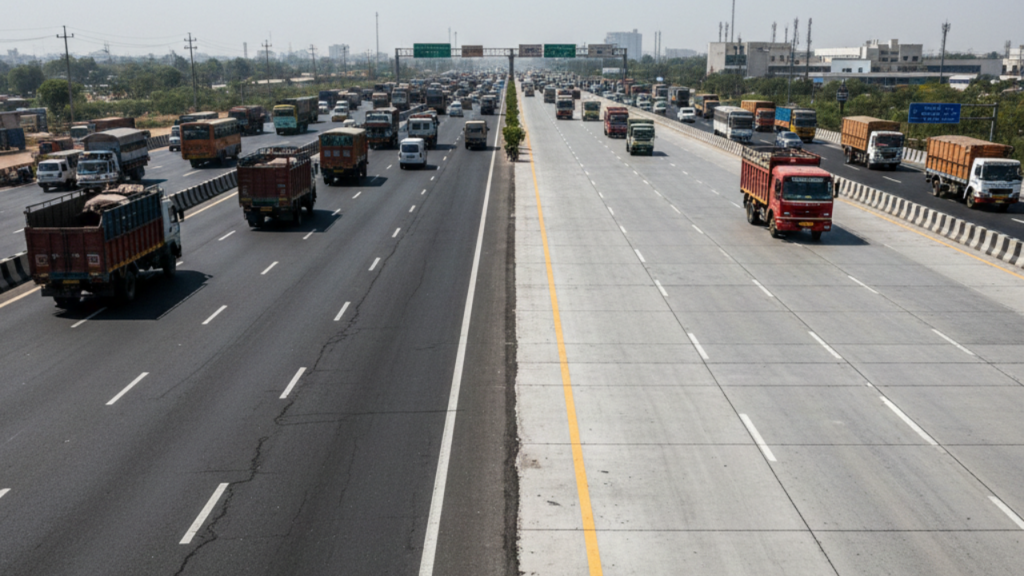
Key Regulatory Bodies
The Ministry of Road Transport and Highways (MoRTH) works alongside IRC to establish and enforce road construction norms. State Public Works Departments (PWDs) and the National Highways Authority of India (NHAI) implement these standards at various administrative levels, ensuring compliance with road construction standards in India across all highway projects.
Essential Components of Long-Lasting Roads: Following Road Construction Standards in India
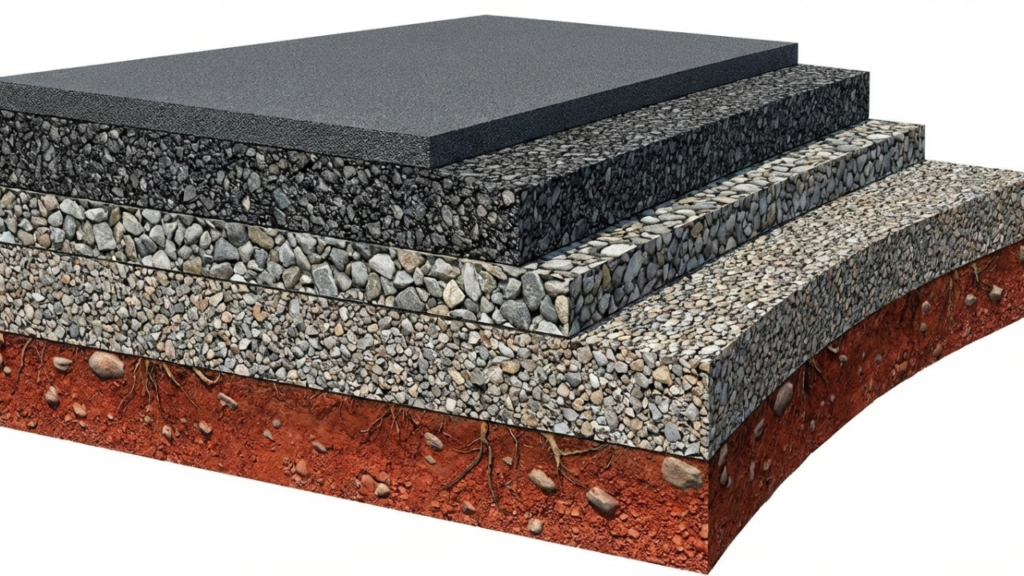
1. Soil Investigation and Subgrade Preparation
The foundation of any durable road begins beneath the surface. Proper soil investigation determines the bearing capacity and characteristics of the ground. According to IRC standards, the subgrade must be prepared to achieve a California Bearing Ratio (CBR) of at least 8-10% for highway construction. This is a fundamental aspect of road construction standards in India that cannot be compromised.
Critical steps in subgrade preparation:
- Removal of organic matter and unsuitable soil layers
- Compaction to achieve 95-98% of maximum dry density
- Proper drainage provisions to prevent water accumulation
- Treatment of weak subgrade areas with lime or cement stabilization
2. Quality Base and Sub-Base Layers
The base and sub-base courses distribute traffic loads effectively to the subgrade. In India, granular sub-base (GSB) typically consists of well-graded crushed stone, gravel, or a combination of materials meeting IRC:37 specifications.
Specifications for base layers:
The thickness varies based on traffic volume, ranging from 150mm to 300mm for sub-base and 150mm to 250mm for base course. The material must achieve a CBR value of minimum 30% for sub-base and 80-100% for base course after compaction.
3. Pavement Design Standards: Core of Road Construction Standards in India
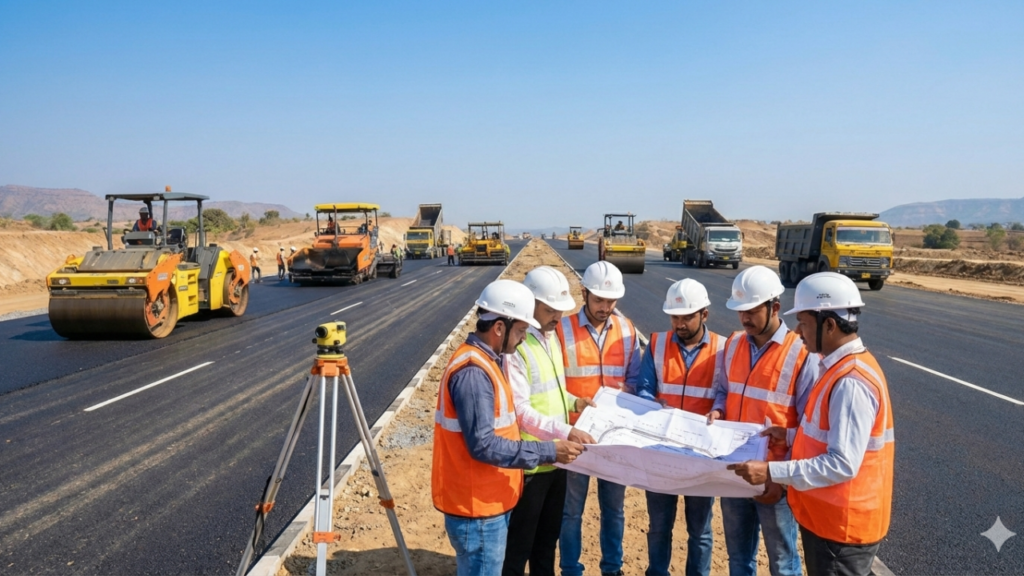
Indian road construction employs two primary pavement types: flexible (bituminous) and rigid (concrete) pavements. The choice depends on traffic volume, climatic conditions, and economic considerations.
Flexible Pavement Construction:
Flexible pavements consist of multiple bituminous layers over the base course. The IRC:37-2018 guidelines specify design parameters based on cumulative standard axles expected over the design life, typically 15-20 years for highways.
The bituminous layers include:
- Dense Bituminous Macadam (DBM) as the binder course (50-100mm thickness)
- Bituminous Concrete (BC) as the wearing course (40-65mm thickness)
- Semi-Dense Bituminous Concrete (SDBC) where required
Rigid Pavement Construction:
Concrete roads offer longer service life, often exceeding 30 years when properly constructed. IRC:58 provides guidelines for rigid pavement design using Portland Cement Concrete with a minimum compressive strength of M40 grade.
Critical elements include:
- Concrete slab thickness ranging from 200mm to 300mm
- Proper joint spacing and design (contraction, expansion, and construction joints)
- Dowel bars and tie bars for load transfer
- Adequate curing period of minimum 14-21 days
4. Drainage Systems: The Lifeline of Road Longevity
Water is the greatest enemy of road infrastructure. Effective drainage systems prevent water infiltration, which causes pavement deterioration, potholes, and structural failure. IRC:SP:50 provides comprehensive guidelines for road drainage as part of the overall road construction standards in India. Proper drainage implementation is discussed in detail in our pavement design standards section.
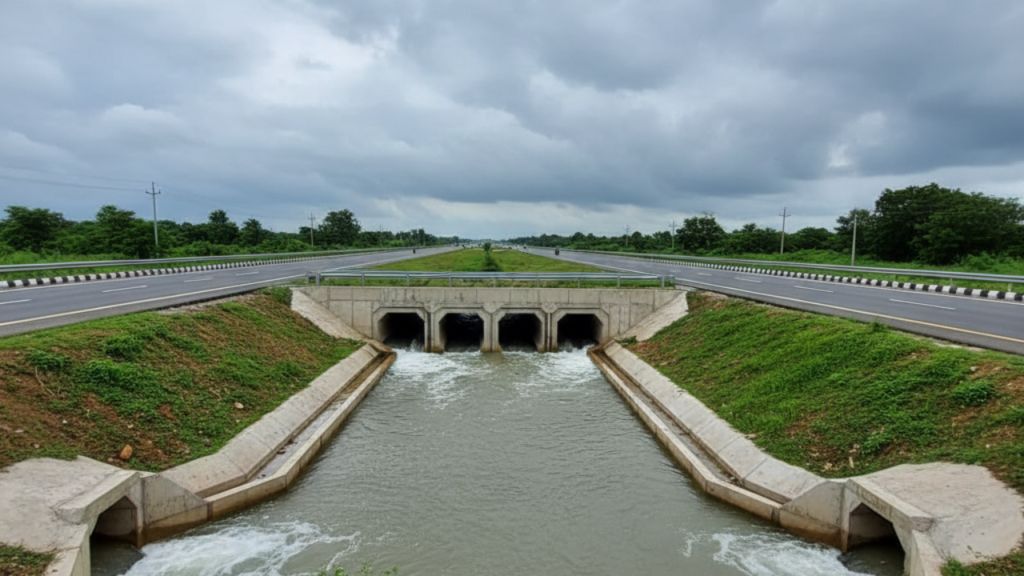
Essential drainage components:
Surface drainage includes camber (2-4% for bituminous surfaces), side drains, catch pits, and culverts. Subsurface drainage involves the installation of filter media, pipe drains, and drainage blankets where the water table is high.
Proper maintenance of drainage structures can extend road life by 40-60%, making it one of the most cost-effective longevity factors.
5. Material Quality Control
The durability of roads heavily depends on material quality. IRC specifications mandate strict quality control for all construction materials.
Bitumen quality standards:
Viscosity Grade (VG) bitumen ranging from VG-10 to VG-40 is used based on climatic conditions. Modified bitumen using polymers like Styrene-Butadiene-Styrene (SBS) or Crumb Rubber Modified Bitumen improves resistance to rutting and cracking in high-traffic corridors, aligning with modern road construction standards in India.
Aggregate specifications:
Aggregates must meet stringent requirements including:
- Los Angeles Abrasion value less than 30%
- Impact value less than 24% for bituminous concrete
- Water absorption less than 2%
- Flakiness and elongation index within prescribed limits
6. Construction Quality and Workmanship
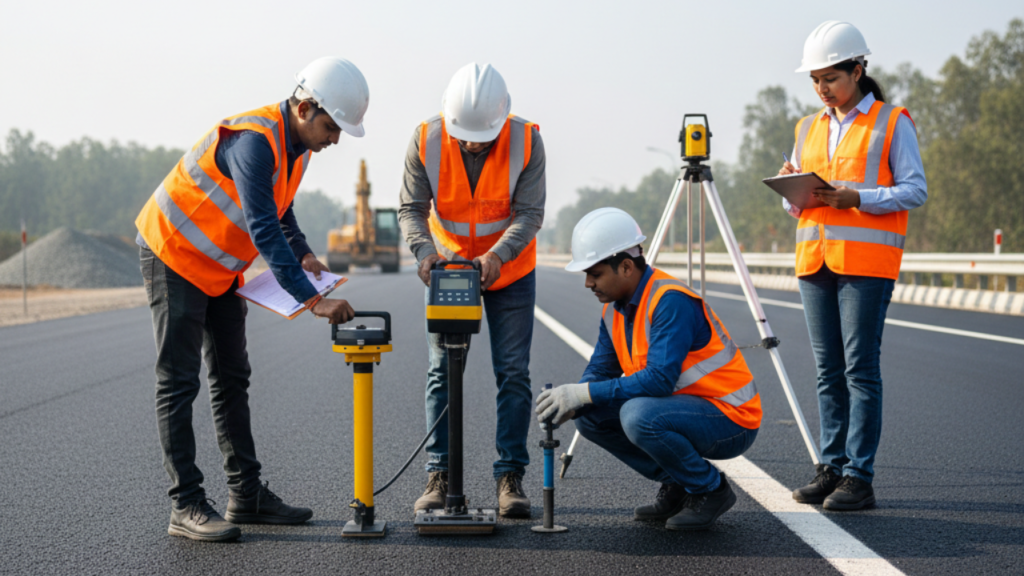
Even the best materials and designs fail without proper construction practices. Quality control during construction ensures standards are met at every stage.
Critical quality measures:
Compaction must be verified using nuclear density gauges or sand replacement methods. Each layer requires testing before the next layer is placed. The bitumen content, mixing temperature, and laying temperature must be monitored continuously during hot mix asphalt production and placement (see our material quality control section for detailed specifications).
Modern projects employ automated sensors and quality management systems to ensure real-time compliance with specifications.
7. Climate-Responsive Design
India’s diverse climate zones require adaptive construction approaches. Roads in coastal areas need corrosion-resistant materials, while those in mountainous regions require enhanced drainage and slope stability measures.
Regional adaptations:
In high-rainfall areas, special attention to drainage and use of modified bitumen prevents moisture damage. In arid regions, temperature variations necessitate crack-resistant designs and reflective coatings to reduce heat absorption.
Cold regions require flexible pavement designs that accommodate freeze-thaw cycles without developing surface distress.
Advanced Technologies Enhancing Road Longevity
Geosynthetics in Road Construction
Geotextiles and geogrids improve subgrade strength, provide separation between layers, and enhance drainage. Their use can reduce pavement thickness by 20-30% while maintaining structural integrity as per road construction standards in India.
Warm Mix Asphalt (WMA)
WMA technology allows bituminous mix production at lower temperatures (20-40°C less than conventional hot mix), reducing energy consumption and emissions while improving workability and compaction.
Recycled Materials
Reclaimed Asphalt Pavement (RAP) and plastic-modified bitumen contribute to sustainability. MoRTH has mandated the use of waste plastic in road construction along national highways, improving binding properties and durability while adhering to environmental road construction standards in India.
Full Depth Reclamation (FDR)
This rehabilitation technique recycles existing pavement materials with stabilizing agents, creating a strong base layer cost-effectively while minimizing environmental impact.
Maintenance: The Key to Extended Road Life
Even well-constructed roads require systematic maintenance to achieve design life expectations. IRC:SP:16 outlines maintenance management systems for roads. Regular maintenance is as important as following initial road construction standards in India (learn more in our preventive maintenance strategies section).
Preventive Maintenance Strategies
Regular surface treatments like fog seals, slurry seals, and micro-surfacing prevent minor surface distresses from developing into major structural problems. These treatments cost a fraction of reconstruction while extending pavement life by 3-7 years.
Routine maintenance activities:
Crack sealing prevents water infiltration and should be performed annually in areas showing surface cracking. Pothole repair using proper materials and techniques prevents accelerated deterioration. Drainage cleaning ensures channels remain functional during monsoons.
Periodic Maintenance
Overlay construction, rehabilitation, and strengthening works are planned based on condition surveys and structural evaluations. Implementing timely periodic maintenance can double the effective life of road infrastructure.
Common Causes of Premature Road Failure in India
Understanding failure mechanisms helps in designing better roads:
Traffic overloading: Vehicles exceeding axle load limits cause exponential damage to pavements. A single overloaded truck can cause damage equivalent to thousands of legal-load vehicles. This violates fundamental road construction standards in India regarding design load assumptions.
Poor drainage: Inadequate or poorly maintained drainage accelerates pavement deterioration through water infiltration and subgrade weakening (refer to our drainage systems section).
Substandard materials: Use of inferior quality aggregates, cement, or bitumen compromises structural integrity from the outset, failing to meet road construction standards in India.
Construction shortcuts: Inadequate compaction, improper layer thickness, and poor workmanship lead to early failures (see construction quality requirements).
Insufficient maintenance: Delayed maintenance allows minor defects to escalate into major structural problems requiring costly reconstruction.
Best Practices for Building Long-Lasting Roads
Successful road projects in India demonstrate that adherence to road construction standards in India ensures longevity. These best practices combine traditional wisdom with modern techniques:
Comprehensive planning: Detailed soil investigations, traffic studies, and design optimization before construction begins prevent costly modifications later.
Quality assurance programs: Independent third-party quality monitoring ensures compliance with specifications throughout the construction process.
Technology adoption: Using modern equipment for mixing, paving, and compaction improves construction quality and consistency.
Performance-based contracts: Shifting from traditional item-rate contracts to performance-based specifications with maintenance periods holds contractors accountable for long-term quality.
Regular monitoring: Implementing pavement management systems with periodic condition surveys enables data-driven maintenance decisions.
The Economic Case for Quality Construction
While high-quality construction requires greater initial investment, the lifecycle cost analysis clearly favors durability. A well-constructed road requiring minimal maintenance over 20 years proves more economical than a substandard road needing frequent repairs.
Studies indicate that spending 20% more on initial construction quality can reduce maintenance costs by 60-70% over the road’s lifetime while improving user experience and safety.
Future of Road Construction in India
The government’s Bharatmala Pariyojana and National Infrastructure Pipeline envision constructing and upgrading thousands of kilometers of highways. These initiatives emphasize strict adherence to road construction standards in India. Emerging trends include:
Smart roads: Integration of sensors for real-time structural health monitoring and traffic management.
Green highways: Emphasis on sustainable materials, renewable energy integration, and environmental protection measures.
Automated construction: Adoption of robotics and artificial intelligence for quality control and construction efficiency.
Innovative materials: Development of self-healing concrete, graphene-enhanced asphalt, and other advanced materials promising extended durability.
Conclusion
Building long-lasting roads in India requires a comprehensive approach encompassing proper design, quality materials, skilled construction, and systematic maintenance. While challenges exist, adherence to established road construction standards in India combined with modern technologies and best practices can significantly improve road longevity.
The key lies in viewing road construction as a long-term infrastructure investment rather than a short-term project. By focusing on quality at every stage—from soil investigation to ongoing maintenance—India can develop a road network that truly serves its growing transportation needs for decades to come.
Stakeholders including government agencies, contractors, consultants, and materials suppliers must collaborate to elevate construction standards. Organizations like the Indian Road Congress continue to update guidelines based on global best practices. Only through this collective commitment can India achieve its vision of world-class, durable road infrastructure that drives economic growth and improves quality of life for millions of citizens.
Have a road construction or rehabilitation project in mind?
Our technical team is ready to help you with planning, execution, and long-term maintenance strategies.
📧 Email us | 📞 Call now | 🌐 Visit mpmgroup.in