
Quality construction in schools represents far more than just building classrooms and corridors—it’s about creating safe, healthy, and nurturing environments where children spend a significant portion of their formative years. Educational institutions house our most vulnerable population, making high-quality school building a critical investment in both student safety and educational success. From structural integrity to fire safety, from indoor air quality to seismic resistance, every aspect of proper construction directly impacts the well-being of thousands of students, teachers, and staff members who occupy these facilities daily.
This comprehensive guide examines how construction quality fundamentally affects safety outcomes in educational buildings. We’ll explore building codes and standards, structural safety requirements, fire protection systems, environmental health considerations, and best practices that ensure our educational institutions provide secure learning environments. Whether you’re a school administrator, architect, engineer, contractor, or concerned parent, understanding the vital connection between construction excellence and student safety is essential for creating educational facilities that protect and serve our communities.
With millions of students attending schools across the country, the stakes couldn’t be higher. Poor construction quality has led to tragic incidents including building collapses, fire fatalities, toxic exposures, and injury-causing accidents that could have been prevented through proper design and execution. Conversely, well-built educational facilities create resilient structures that withstand natural disasters, prevent accidents, support healthy development, and provide peace of mind to parents entrusting their children’s safety to these institutions.
Understanding Quality Standards for School Construction & Educational Facilities
Quality construction in schools must comply with rigorous building codes and educational facility standards that exceed those for typical commercial construction. According to the National Fire Protection Association (NFPA), educational occupancies face unique safety challenges requiring specialized design considerations and enhanced protective measures.
Building Code Requirements for Educational Facilities
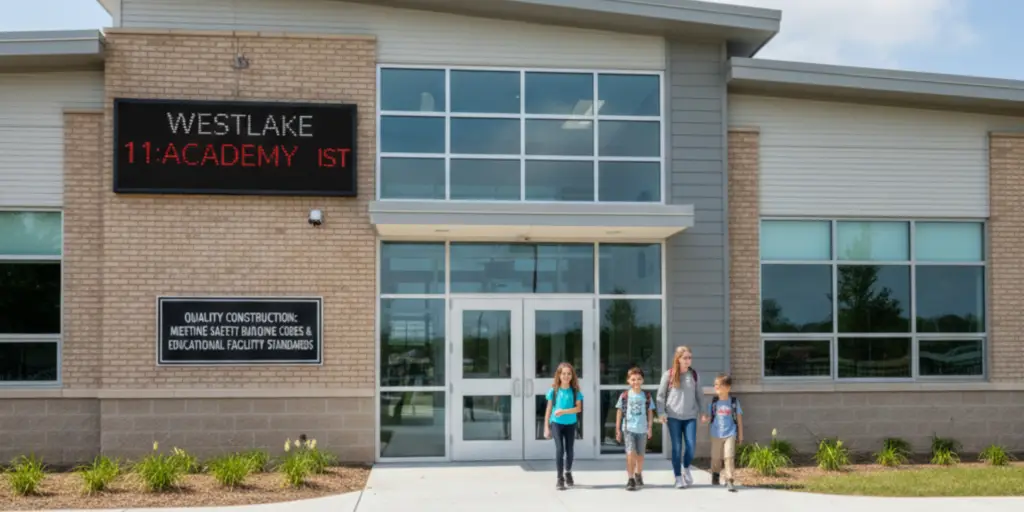
School construction operates within a comprehensive regulatory framework designed to protect student safety. The International Building Code (IBC) and International Fire Code (IFC) classify educational buildings under Group E occupancy, triggering specific requirements for structural design, fire protection, means of egress, and accessibility. State and local building codes often impose additional requirements tailored to regional hazards and community standards.
Key Code Provisions for Schools:
Occupant load calculations for educational facilities use more conservative factors than commercial buildings, recognizing higher student densities during class changes and assemblies. Proper school building must provide adequate exit capacity based on these higher occupancy loads. Fire-resistance ratings for structural elements, walls, and floor assemblies ensure buildings maintain integrity during fires, allowing safe evacuation. Egress requirements including corridor widths, exit door sizing, and maximum travel distances to exits are more stringent for schools than office buildings.
Accessibility standards under the Americans with Disabilities Act (ADA) and state accessibility codes ensure safe educational facilities accommodate students with physical disabilities. Ramps, elevators, accessible restrooms, and classroom layouts must meet specific dimensional and operational requirements. Universal design principles incorporated during construction create inclusive environments benefiting all students regardless of ability.
Educational Facility Design Standards
Beyond basic building codes, well-designed school facilities should follow best practice guidelines from educational facility organizations. The Council of Educational Facility Planners International (CEFPI) provides comprehensive design standards addressing educational needs alongside safety requirements. State education departments often publish facility standards that local school districts must follow for new construction and major renovations.
Design Considerations:
Age-appropriate design elements ensure school construction meets developmental needs of different student populations. Elementary schools require lower fixtures, smaller-scale furnishings, and protected outdoor play areas. Middle and high schools need specialized spaces for science laboratories, vocational programs, and athletics. Classroom acoustics, lighting quality, and thermal comfort directly impact learning outcomes, making these environmental factors integral to educational building design.
Security provisions including controlled entry points, visual access for supervision, and integration with electronic security systems have become essential components of modern school facilities. Balancing openness that supports learning with security protecting against external threats requires thoughtful design during initial construction rather than retrofit additions.
Structural Safety in School Construction
The structural integrity of educational buildings forms the foundation of all other safety considerations. Safe school building demands robust structural systems that protect occupants from collapse, resist natural hazards, and provide long-term reliability.
Foundation and Structural Systems
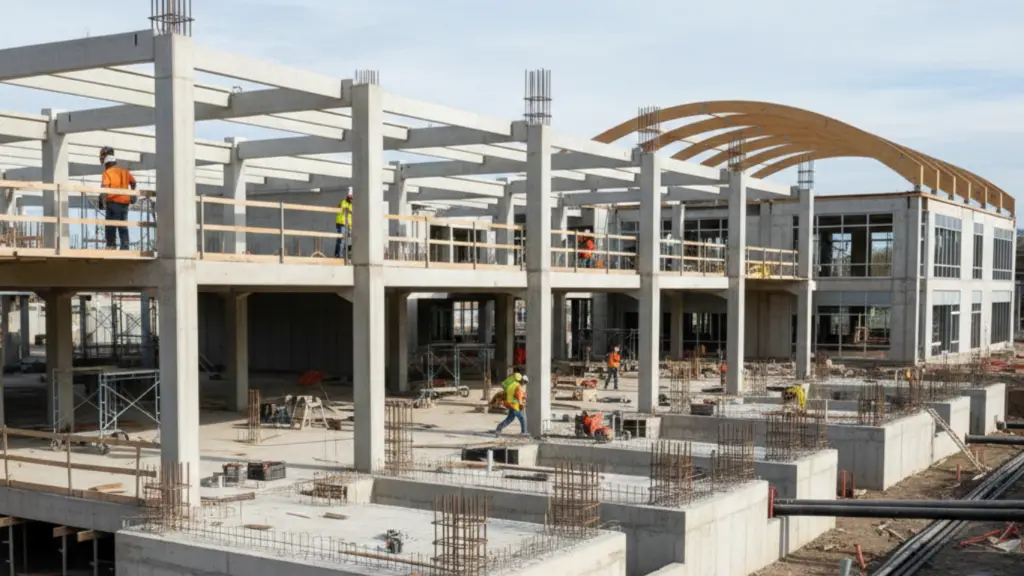
Quality construction in schools begins with proper foundation design based on thorough geotechnical investigation. Soil conditions vary significantly across sites, requiring customized foundation solutions. Shallow spread footings work well in competent soils, while deep pile or pier foundations transfer loads through weak soils to stable bearing strata. Improperly designed or constructed foundations can lead to differential settlement causing structural damage, doors and windows that won’t operate properly, and in severe cases, partial building collapse.
Structural Frame Design:
Most modern quality construction in schools employs either structural steel, reinforced concrete, or masonry bearing wall systems. Each material offers specific advantages when properly designed and constructed. Steel framing provides excellent strength-to-weight ratios and allows large open classroom spaces without intermediate columns. Concrete construction offers superior fire resistance and acoustic isolation between spaces. Masonry load-bearing walls combined with steel roof structures provide economical solutions for single-story schools.
Regardless of material selection, quality construction in schools requires proper connections between structural elements, adequate bracing against lateral loads, and verification of construction quality through inspections and testing. Structural failures in schools have occurred due to inadequate reinforcement, poor concrete quality, improper welding, and design errors—all preventable through rigorous quality control during construction.
Seismic Resistance and Natural Hazard Protection
Schools in seismically active regions require enhanced structural design for quality construction in schools that protects lives during earthquakes. Modern seismic codes require buildings to remain standing during major seismic events even if damaged, preventing collapse that causes fatalities. Older school buildings constructed before current seismic codes may require retrofitting to achieve adequate safety levels.
Seismic Design Elements:
Ductile detailing allows structural elements to deform without fracturing during earthquakes. Special reinforcement patterns in concrete, moment connections in steel frames, and proper anchoring of masonry walls all contribute to seismic performance. Quality construction in schools in high seismic zones may incorporate base isolation systems, damping devices, or other advanced technologies reducing seismic forces transmitted to the structure.
Other Natural Hazards:
Hurricane-prone regions require quality construction in schools with wind-resistant roofing, impact-resistant glazing, and properly anchored structural systems. Tornado shelters within schools provide refuge during severe weather events. Flood-prone areas benefit from elevated construction, flood-resistant materials, and protected utility systems. Snow loading in northern climates demands robust roof structures preventing collapse under extreme snow accumulation.
The Federal Emergency Management Agency (FEMA) provides guidance on designing and constructing schools resistant to natural hazards, recognizing that educational facilities often serve as community emergency shelters requiring higher resilience than typical buildings.
Regular Structural Inspections and Maintenance
Even the highest quality construction in schools requires ongoing maintenance and periodic structural inspections ensuring continued safety. Roof inspections identify deterioration before leaks cause structural damage. Foundation monitoring detects settlement issues early when repair costs remain manageable. Corrosion protection for steel structures prevents strength degradation over time.
Many states mandate periodic structural assessments of school facilities identifying deficiencies requiring attention. These programs ensure quality construction in schools maintains safety standards throughout buildings’ service lives, typically 50+ years for permanent educational facilities.
Fire Safety and Life Protection Systems
Fire safety represents one of the most critical aspects of quality construction in schools, with historical school fires resulting in tragic loss of life leading to stringent current requirements.
Fire-Resistant Construction
Quality construction in schools incorporates fire-resistant materials and assemblies limiting fire spread and providing time for safe evacuation. Fire-resistance ratings specify how long building elements withstand fire exposure before structural failure. Educational buildings typically require one- to two-hour fire-resistance ratings for structural frames, floor/ceiling assemblies, and certain wall constructions.
Fire-Resistant Materials:
Concrete and masonry materials provide inherent fire resistance without additional protection. Structural steel requires fire-resistive coatings or encasement since steel loses strength rapidly at elevated temperatures. Wood construction, while allowed in some school applications, requires fire-retardant treatment or sprinkler protection. Interior finishes including wall coverings, ceiling tiles, and floor materials must meet flame spread and smoke development limits preventing rapid fire growth.
Corridor walls and doors in quality construction in schools create fire-rated separations allowing safe egress even when fires occur in classrooms or other spaces. Rated door assemblies include proper hardware, gaskets, and automatic closers maintaining fire barriers. Penetrations through fire-rated walls for pipes, ducts, and cables require approved firestop systems preventing fire spread through these openings.
Automatic Fire Sprinkler Systems
Modern quality construction in schools almost universally includes automatic sprinkler systems providing the highest level of fire protection. The National Fire Sprinkler Association reports that sprinklers control or extinguish fires in over 96% of cases where they activate, dramatically reducing property damage and preventing loss of life.
Sprinkler System Design:
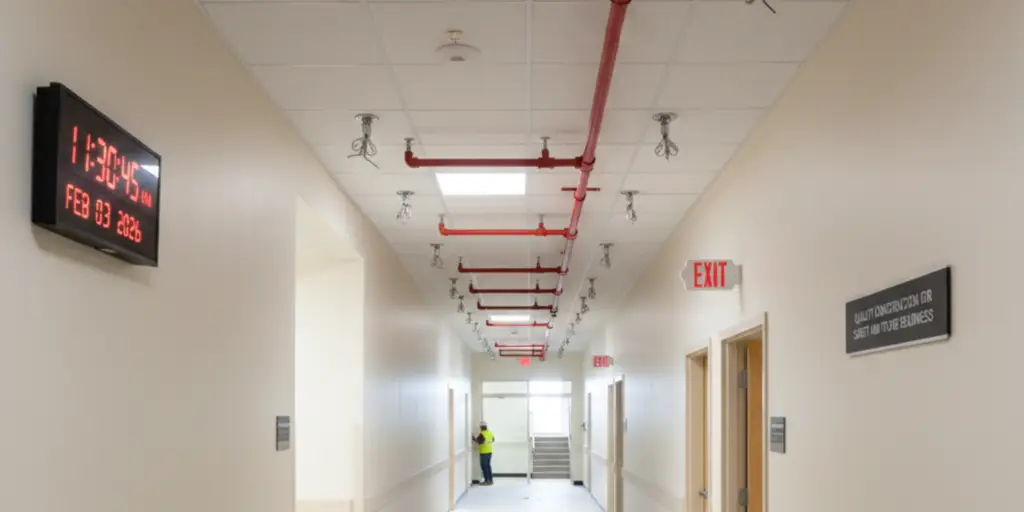
Educational occupancy sprinkler systems typically use wet pipe configurations with water-filled pipes ready for immediate discharge when sprinkler heads activate. Design densities and head spacing follow NFPA 13 standards, with higher densities in areas storing combustible materials. Specialized systems protect specific hazards including commercial kitchens, laboratories with flammable materials, and stages in auditoriums.
Quality construction in schools ensures sprinkler systems receive adequate water supply from municipal connections, fire pumps, or on-site storage tanks. Backflow prevention protects potable water supplies. Valves and piping installations allow system maintenance without complete shutdown. Regular testing and inspection by qualified technicians maintains system reliability throughout the building’s life.
Fire Detection and Alarm Systems
Even with sprinkler protection, quality construction in schools requires comprehensive fire detection and alarm systems providing early warning allowing evacuation before conditions become dangerous.
System Components:
Smoke detectors in corridors, classrooms, mechanical rooms, and other spaces detect fires early in development. Heat detectors supplement smoke detection in areas where smoke detection would cause nuisance alarms. Manual pull stations at exit locations allow occupants to initiate alarms when discovering fires. Audible and visual notification devices including horns, strokers, and speaker systems alert occupants throughout buildings.
Voice evacuation capability in quality construction in schools allows communication of specific instructions during emergencies rather than just alarm signals. Messages can direct occupants away from affected areas, announce lockdown procedures, or provide other critical information. Integration with public address systems allows emergency responders to communicate with building occupants during incidents.
Modern systems use addressable technology identifying specific devices in alarm, helping responders locate fires quickly. Integration with building automation systems automatically shuts down air handling equipment preventing smoke distribution through ductwork, recalls elevators to safe floors, releases magnetic door holders allowing fire doors to close, and unlocks electronic access control systems allowing free egress.
Means of Egress Design
Safe evacuation routes represent a fundamental requirement for quality construction in schools. Building codes specify detailed requirements for exit arrangement, capacity, and protection.
Exit Requirements:
Every point in school buildings must have access to at least two independent exit paths, ensuring blocked exits don’t trap occupants. Exit travel distances limit how far occupants must travel to reach safety. Elementary schools typically have shorter maximum travel distances than high schools, recognizing younger students’ limited mobility and evacuation capabilities.
Exit doors in quality construction in schools must open in the direction of egress travel, have panic hardware allowing operation without keys or special knowledge, and remain unlocked during occupancy. Exterior exit doors may have delayed egress hardware allowing 15-30 second delays before releasing, deterring unauthorized exits while still allowing emergency egress. This addresses security concerns without compromising life safety.
Exit stairs require specific width, rise/run dimensions, handrails, and landing configurations ensuring safe use during evacuations. Quality construction in schools provides adequate exit stair capacity based on occupant loads, with wider stairs for high-occupancy areas. Protection of exit stairs through fire-rated enclosures, pressurization systems preventing smoke infiltration, and emergency lighting ensures stairs remain usable during fires.
Indoor Environmental Quality and Health
Beyond immediate life safety, quality construction in schools profoundly impacts student and staff health through indoor environmental quality. Poor air quality, inadequate ventilation, toxic materials, and uncomfortable conditions affect learning outcomes and long-term health.
Ventilation and Indoor Air Quality
Adequate ventilation represents a critical yet often overlooked aspect of quality construction in schools. The Environmental Protection Agency (EPA) identifies poor indoor air quality as a significant concern in educational facilities, contributing to asthma, allergies, respiratory infections, and reduced cognitive performance.
Ventilation Requirements:
Modern building codes and ASHRAE Standard 62.1 specify minimum outdoor air ventilation rates for classrooms, typically 15 cubic feet per minute per person. Quality construction in schools provides mechanical ventilation systems reliably delivering required outdoor air regardless of weather conditions. Natural ventilation through operable windows may supplement mechanical systems but shouldn’t be relied upon as the sole ventilation source given variable weather and seasonal limitations.
HVAC System Design:
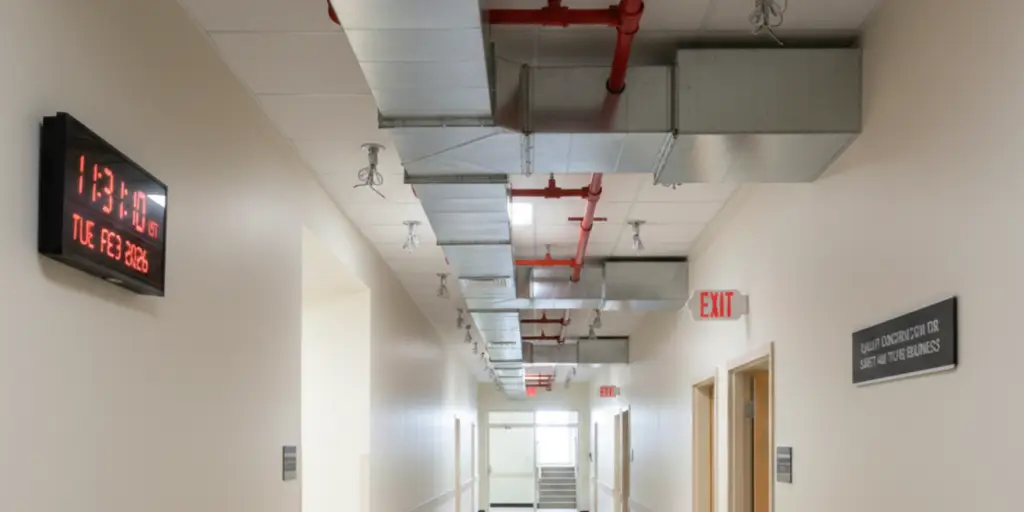
Dedicated outdoor air systems (DOAS) in quality construction in schools treat outdoor ventilation air before introducing it to spaces, removing excess humidity and filtering particulates. Constant volume or variable air volume systems distribute conditioned air throughout buildings. Proper system balancing ensures all spaces receive design airflow rates.
Air filtration using MERV 13 or higher rated filters removes particles including pollen, mold spores, bacteria, and viruses improving indoor air quality. Some quality construction in schools incorporates HEPA filtration or ultraviolet germicidal irradiation (UVGI) systems providing additional air cleaning, particularly valuable during disease outbreaks.
Regular maintenance including filter changes, coil cleaning, and ductwork cleaning maintains system performance and prevents air quality degradation over time. Well-designed systems in quality construction in schools facilitate maintenance access and incorporate monitoring capabilities alerting facility managers to issues requiring attention.
Material Selection and Toxin Avoidance
Construction materials significantly impact indoor air quality in educational facilities. Quality construction in schools specifies low-emitting materials minimizing volatile organic compounds (VOCs) and other pollutants released into indoor air.
Low-VOC Materials:
Paints, adhesives, sealants, and coatings in quality construction in schools should meet low-VOC emission standards verified by third-party certifications such as GreenGuard or Green Seal. Composite wood products including particleboard, plywood, and medium-density fiberboard (MDF) should use no-added formaldehyde resins preventing formaldehyde off-gassing that irritates respiratory systems.
Flooring materials including carpet, vinyl, and resilient tiles emit VOCs during and after installation. Quality construction in schools selects products with low emissions, properly ventilates during installation, and allows off-gassing periods before student occupancy. Hard surface flooring like ceramic tile, polished concrete, or solid hardwood generally emit fewer VOCs than synthetic products.
Furniture and furnishings contribute to indoor air quality. School districts specifying low-emitting furniture, avoiding pressed wood products with formaldehyde-based adhesives, and requiring emission testing extend quality construction in schools principles beyond the building envelope to complete learning environments.
Asbestos, Lead, and Hazardous Material Management
While modern quality construction in schools avoids hazardous materials, renovation of older buildings requires careful management of legacy materials including asbestos, lead paint, and other toxins.
Asbestos Abatement:
Schools constructed before the 1980s likely contain asbestos in insulation, floor tiles, ceiling tiles, and other building materials. The Asbestos Hazard Emergency Response Act (AHERA) requires schools to inspect for asbestos, develop management plans, and safely remove or encapsulate friable asbestos during renovations. Proper abatement during quality construction in schools renovation projects protects workers and future occupants from asbestos exposure.
Lead Paint Management:
Lead paint in pre-1978 schools poses health risks particularly to young children. Renovation activities disturbing lead paint require lead-safe work practices including containment, specialized cleaning, and worker training. Quality construction in schools addressing older buildings incorporates lead testing and appropriate remediation ensuring student safety.
Acoustic Design and Noise Control
Classroom acoustics significantly impact learning effectiveness, with excessive noise and reverberation interfering with speech intelligibility. Quality construction in schools addresses acoustic performance through material selection and spatial design.
Acoustic Treatment:
Acoustic ceiling tiles with high Noise Reduction Coefficient (NRC) ratings absorb sound reducing reverberation in classrooms. Wall-mounted acoustic panels treat specific reflection paths. Carpet and other soft floor coverings reduce impact noise and foot traffic sounds. Quality construction in schools balances acoustic absorption with other requirements including cleanability and durability.
Background noise from HVAC systems, plumbing, exterior traffic, and other sources interferes with learning when excessive. Quality HVAC system design uses quiet equipment, proper duct sizing preventing excessive air velocity noise, and vibration isolation preventing structure-borne noise transmission. Window specifications in quality construction in schools near highways or airports include appropriate Sound Transmission Class (STC) ratings blocking exterior noise.
Security and Safety Integration
Modern quality construction in schools integrates physical security measures addressing unfortunately common threats including unauthorized access, active shooter situations, and other security incidents.
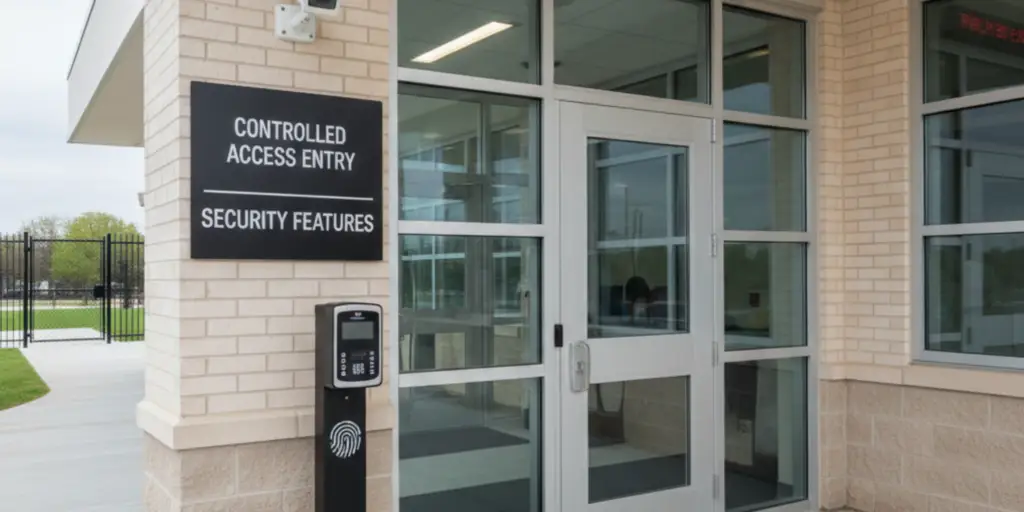
Controlled Access and Visitor Management
Quality construction in schools incorporates single-point entry designs funneling all visitors through controlled access points where identification verification and sign-in procedures occur. Main entrance visibility from administrative offices allows continuous monitoring of entry activity. Vestibule or “sally port” designs with two sets of doors prevent unauthorized individuals from gaining building access without passing security checkpoints.
Access Control Systems:
Electronic access control systems in quality construction in schools restrict entry to authorized individuals with credentials while maintaining free egress during emergencies. Card readers, biometric systems, or smartphone-based credentials provide various authentication methods. Time-based access schedules allow different access levels during school hours, after-hours activities, and when buildings are closed.
Visitor management systems integrated into quality construction in schools issue temporary credentials to approved visitors, maintain visitor logs, and enable quick lockdown or revocation of access during security incidents. Video verification allows staff to see visitors before allowing entry through electronically controlled doors.
Interior Security Design
Beyond perimeter security, interior design in quality construction in schools enhances safety through visibility, compartmentalization, and hardened spaces.
Design Strategies:
Transparent glazing in classroom doors and corridor walls allows visual supervision while maintaining acoustic separation. Strategic placement of administrative spaces provides sightlines to corridors, commons areas, and entry points. Avoiding isolated corridors, hidden alcoves, and unmonitored spaces reduces opportunities for bullying, violence, and unauthorized activities.
Lockable classroom doors with classroom-side locking capability allow teachers to initiate lockdowns quickly during emergencies without entering corridors. Quality construction in schools provides appropriate door hardware meeting both security needs and fire code requirements—a challenging balance requiring careful specification.
Safe rooms or hardened areas within schools provide refuge during active threat situations. These spaces feature reinforced walls, bullet-resistant glazing, secure communication systems, and sometimes dedicated ventilation preventing chemical/biological agent introduction. While controversial and expensive, some quality construction in schools projects incorporate these features responding to community safety concerns.
Integration with Electronic Security Systems
Quality construction in schools increasingly incorporates sophisticated electronic security systems working in concert with physical design elements.
System Components:
Video surveillance with cameras covering exterior perimeters, parking areas, corridors, commons areas, and building entry points provides monitoring capability and incident documentation. Modern IP-based systems allow remote viewing by administrators, school resource officers, and law enforcement. Storage of video footage for investigation and evidence purposes requires adequate server capacity planned during initial quality construction in schools.
Intrusion detection systems monitor doors, windows, and sensitive areas for unauthorized access when buildings are unoccupied. Integration with access control and video surveillance creates comprehensive security platforms managed through unified interfaces.
Emergency notification systems including public address, digital signage, text messaging, and email allow rapid communication during incidents. Quality construction in schools provides infrastructure supporting these systems including adequate conduit pathways, equipment rooms, and power supplies with battery backup.
Playground and Exterior Safety
Quality construction in schools extends beyond building interiors to playground equipment, sports facilities, and exterior spaces where injuries commonly occur.
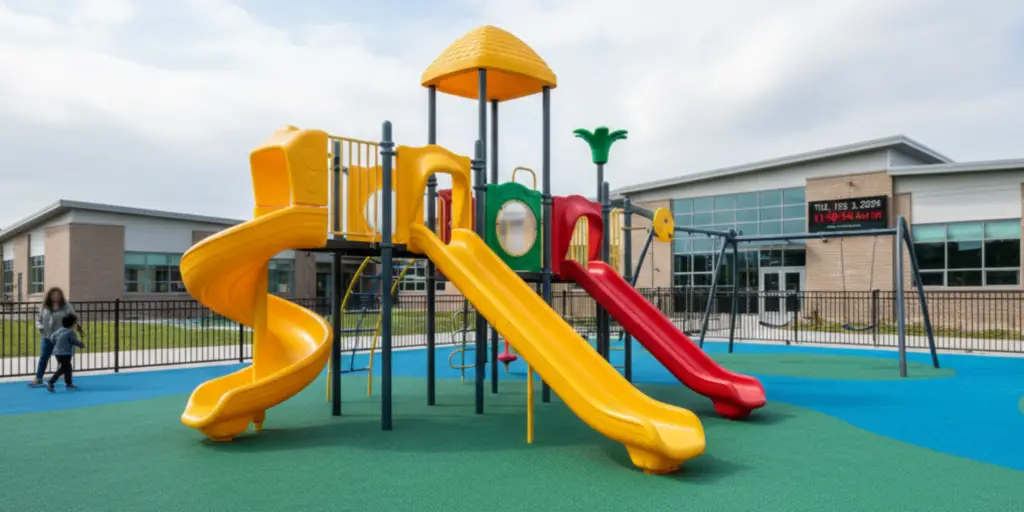
Playground Equipment and Surfacing
Playground injuries account for significant numbers of school-related accidents, making proper equipment selection, installation, and surfacing critical aspects of quality construction in schools.
Safety Standards:
Playground equipment must meet ASTM F1487 or CPSC guidelines addressing design, installation, and maintenance. Appropriate equipment for different age groups prevents injuries from developmental mismatches. Quality construction in schools separates playground areas for younger and older children, using age-appropriate equipment in each zone.
Impact-attenuating surfaces beneath and around playground equipment reduce injury severity during falls—the most common playground accident type. Engineered wood fiber, rubber tiles, or poured-in-place rubber surfacing meeting ASTM F1292 impact attenuation standards protect children better than grass, dirt, or asphalt. Proper surfacing depth and fall zone dimensions ensure quality construction in schools provides adequate protection.
Regular inspections identifying worn components, loose fasteners, or other hazards maintain playground safety. Quality construction in schools uses durable, vandal-resistant equipment requiring minimal maintenance while providing long service life.
Athletic Facilities and Sports Safety
Gymnasiums, athletic fields, and sports facilities require specific design considerations in quality construction in schools protecting student athletes from injury.
Indoor Athletic Facilities:
Gymnasium floors with proper shock absorption reduce impact injuries during basketball, volleyball, and other court sports. Adequate safety zones around courts prevent collisions with walls or equipment. Wall padding at appropriate heights protects players. Proper anchoring of basketball goals, volleyball standards, and other equipment prevents tip-over accidents.
Spectator areas in gymnasiums require proper egress capacity, guardrails at elevated seating, and separation from playing surfaces. Quality construction in schools addresses these requirements ensuring athletic events remain safe for participants and spectators.
Exterior Athletic Fields:
Synthetic turf or well-maintained natural grass fields provide safer playing surfaces than poorly maintained fields with holes, uneven surfaces, or hard soil. Proper grading ensures drainage preventing water accumulation creating slip hazards. Adequate setbacks from fences, dugouts, and other obstructions reduce collision injuries.
Protective fencing around baseball/softball fields, proper goal anchoring for soccer fields, and adequate lighting for evening activities all represent elements of quality construction in schools supporting safe athletic programs.
Long-Term Durability and Maintainability
Quality construction in schools considers not just initial safety but long-term durability ensuring continued safe operation throughout buildings’ multi-decade service lives.
Durable Material Selection
School buildings experience heavy use and sometimes abuse requiring more durable materials and systems than typical commercial construction. Quality construction in schools specifies materials proven to withstand educational facility demands.
High-Durability Materials:
Impact-resistant gypsum board, concrete masonry units, or fiber-cement panels in corridor walls resist damage from carts, backpacks, and rough handling better than standard drywall. Solid-core doors with reinforced frames withstand thousands of daily opening/closing cycles and resist kick-in attempts. Hardware including locksets, hinges, and door closers rated for high-cycle use ensure long service before requiring replacement.
Flooring materials in quality construction in schools must resist scratching, staining, and wear from heavy foot traffic, moving furniture, and cleaning procedures. Terrazzo, polished concrete, ceramic tile, and commercial-grade vinyl composition tile (VCT) provide long-lasting floor surfaces. Carpet in classroom areas should use commercial-grade products with antimicrobial treatments and stain resistance.
Maintenance Accessibility
Even the highest quality construction in schools requires regular maintenance. Design decisions facilitating maintenance reduce long-term costs and ensure continued safe operation.
Maintenance Considerations:
Mechanical equipment rooms with adequate space for service access allow technicians to perform preventive maintenance and repairs efficiently. Ceiling access panels at critical equipment locations prevent destructive access when service is needed. Roof access hatches or permanent ladders facilitate routine roof inspections and maintenance without requiring special equipment.
Exterior building materials and systems in quality construction in schools should minimize maintenance requirements while allowing practical maintenance when needed. Brick or masonry veneer exteriors require minimal maintenance compared to materials needing regular painting. Metal panel systems with durable finishes eliminate painting while providing attractive appearances.
Life cycle cost analysis during design identifies systems and materials offering best value considering initial costs, maintenance requirements, energy costs, and expected service life. Quality construction in schools optimizes these factors rather than simply minimizing first costs.
Best Practices for Quality Construction in Schools
Drawing from successful educational facility projects and research on school safety, these best practices ensure quality construction in schools achieves optimal safety outcomes:
Comprehensive Planning: Engage all stakeholders including educators, facilities managers, students, parents, and community members early in design ensuring functional requirements and safety priorities are understood and addressed. Quality construction in schools requires more planning time than typical commercial projects given multiple stakeholder groups and complex program requirements.
Experienced Design Teams: Select architects and engineers with educational facility experience understanding unique code requirements, operational needs, and safety considerations. Specialized consultants for acoustics, lighting, and security enhance quality construction in schools addressing these critical aspects.
Value Engineering With Caution: Budget pressures often force value engineering during design, but cuts compromising safety, durability, or long-term performance prove penny-wise and pound-foolish. Quality construction in schools maintains investment in life safety systems, structural adequacy, and materials quality even when reducing costs in other areas.
Quality Construction Administration: Engaged architects and engineers providing thorough construction observation identify deficiencies early when correction costs remain minimal. Third-party special inspections and testing of critical elements including structural systems, fire protection, and building envelope ensure quality construction in schools meets design intent.
Commissioning: Comprehensive building commissioning including HVAC systems, fire alarm and suppression systems, and security systems verifies proper installation and performance before building occupancy. Functional testing confirms systems operate correctly under actual conditions rather than assumptions. Quality construction in schools increasingly incorporates commissioning ensuring systems protect student safety as designed.
Documentation and Training: Thorough operation and maintenance manuals, as-built drawings, and training for facilities staff ensure quality construction in schools continues performing safely throughout service life. Well-trained staff performing preventive maintenance prevent many common building failures.
Conclusion
Quality construction in schools represents one of society’s most important infrastructure investments, creating safe environments where children learn, grow, and develop. From structural integrity preventing building collapse to fire protection systems saving lives, from indoor air quality supporting health to security measures preventing violence, every aspect of quality construction in schools directly impacts the safety and well-being of students and staff occupying educational facilities.
The connection between construction quality and school safety isn’t abstract—it’s demonstrated through tragic accidents in poorly constructed facilities and the absence of incidents in well-built schools. Quality construction in schools requires investment, expertise, and commitment, but the alternative—cutting corners on student safety—is simply unacceptable to responsible communities.
As we look to the future, quality construction in schools must adapt to evolving challenges including climate change, emerging security threats, pandemic preparedness, and technological integration while maintaining focus on fundamental safety principles. By following established codes and standards, incorporating best practices, engaging experienced professionals, and maintaining facilities properly, school districts create educational environments where safety concerns don’t distract from the primary mission: providing excellent education to all students.
Parents entrusting their children to schools deserve confidence that quality construction in schools protects those children from preventable harm. Communities investing in educational facilities deserve buildings that serve safely for generations. Students deserve learning environments supporting their development without exposing them to unnecessary risks. Quality construction in schools delivers on these reasonable expectations, making it not merely desirable but essential.
For additional information on school facility planning and construction, consult resources from the U.S. Green Building Council’s LEED for Schools program, the Collaborative for High Performance Schools (CHPS), or engage qualified professionals specializing in educational facility design and construction. Our children’s safety depends on our commitment to quality construction in schools that meets the highest standards of safety, health, and performance.
Related Topics:
Hi, this is a comment.
To get started with moderating, editing, and deleting comments, please visit the Comments screen in the dashboard.
Commenter avatars come from Gravatar.