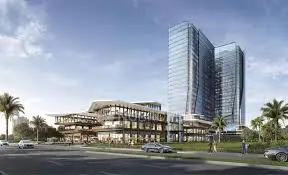
High-rise tower construction in India has experienced unprecedented growth over the past two decades, transforming city skylines across Mumbai, Bangalore, Delhi, Hyderabad, and other major metropolitan areas. As urban populations surge and land becomes increasingly scarce, vertical development through high-rise tower construction in India represents the future of sustainable urban growth. However, building structures exceeding 25 floors presents unique engineering, logistical, and regulatory challenges that demand specialized expertise and innovative solutions.
This comprehensive guide explores the multifaceted challenges of high-rise tower construction in India, examining technical complexities, regulatory frameworks, construction methodologies, and best practices that ensure successful project delivery. Whether you’re a developer, architect, engineer, or construction professional, understanding these challenges is essential for executing world-class high-rise tower construction in India that meets international standards while addressing local conditions.
From foundation engineering in diverse soil conditions to vertical transportation of materials, from wind resistance design to fire safety compliance, high-rise tower construction in India demands meticulous planning, cutting-edge technology, and unwavering commitment to quality and safety. Let’s explore what makes these mega-projects both challenging and rewarding.
Understanding High-Rise Tower Construction in India
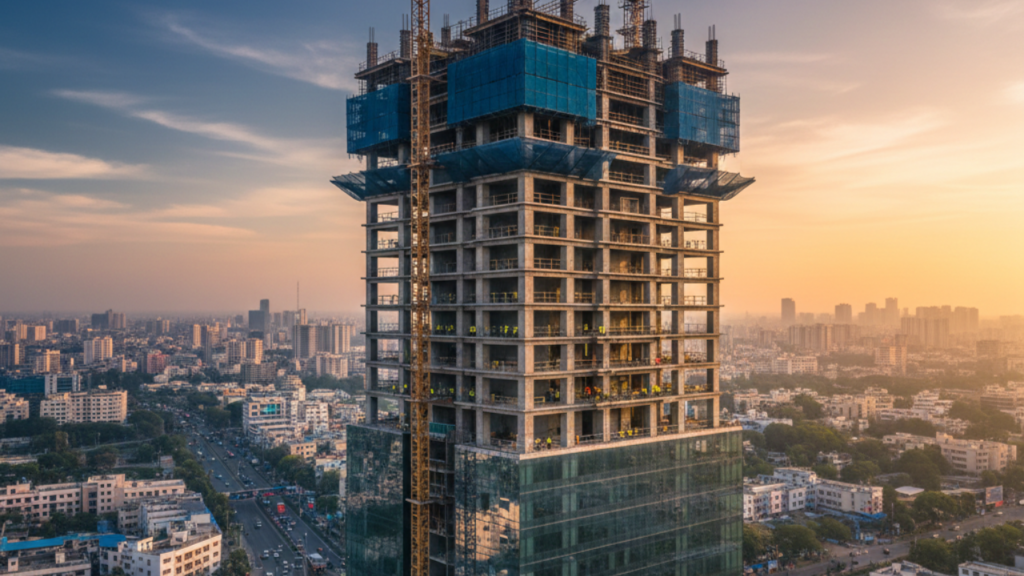
High-rise tower construction in India is typically defined as buildings exceeding 15-20 floors or approximately 70-75 meters in height, though the most complex challenges emerge in structures of 25+ floors. According to the Council on Tall Buildings and Urban Habitat (CTBUH), India now ranks among the top countries globally for high-rise construction activity, with hundreds of projects underway across major cities.
Regulatory Framework for High-Rise Tower Construction in India
High-rise tower construction in India operates within a complex regulatory environment involving multiple authorities and compliance requirements. The National Building Code of India (NBC) 2016 provides foundational standards, while state-level building regulations add specific requirements. Municipal corporations in cities like Mumbai (MCGM), Delhi (MCD), and Bangalore (BBMP) enforce local development control regulations governing height restrictions, setbacks, and density.
Key Regulatory Considerations:
Fire safety approvals from state fire departments become mandatory for high-rise tower construction in India exceeding certain heights, typically 15 meters. Environmental clearances from pollution control boards address construction impact, waste management, and operational emissions. Structural stability certificates from licensed structural engineers verify design adequacy. Lift and escalator approvals ensure vertical transportation meets safety standards. Aviation clearance from the Airports Authority of India (AAI) prevents interference with flight paths in proximity to airports.
The approval process for high-rise tower construction in India can extend 6-18 months depending on project complexity and location, making early engagement with regulatory authorities essential for timeline management.
Economic Drivers and Market Dynamics
High-rise tower construction in India is driven by multiple economic factors including skyrocketing land costs in urban centers making vertical development economically viable, population density in cities like Mumbai exceeding 20,000 people per square kilometer, corporate demand for Grade-A office space in business districts, and luxury residential demand from high-net-worth individuals seeking premium addresses.
The National Real Estate Development Council (NAREDCO) reports that high-rise residential and commercial projects command premium pricing, often 20-40% above low-rise developments in equivalent locations, justifying the higher construction costs and complexity of high-rise tower construction in India.
Foundation Engineering Challenges in High-Rise Tower Construction in India
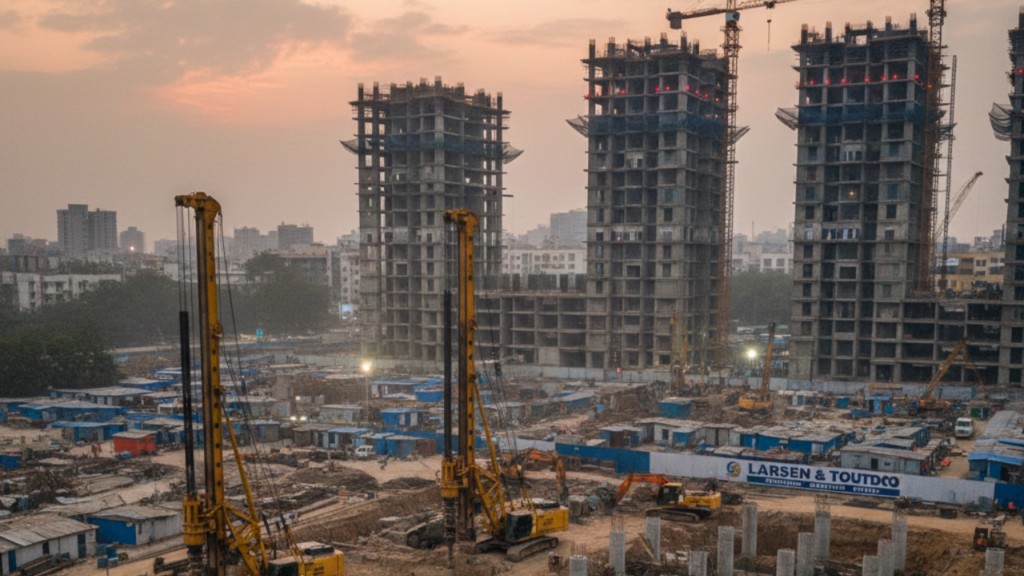
Foundation design represents one of the most critical challenges in high-rise tower construction in India, with diverse soil conditions across the country requiring customized engineering solutions.
Soil Conditions Across Indian Cities
Mumbai: Coastal city with marine clay deposits, high groundwater tables, and reclaimed land areas. High-rise tower construction in India’s financial capital often encounters soft clay layers requiring deep pile foundations extending 30-50 meters to reach adequate bearing strata.
Delhi-NCR: Alluvial plains with varying soil profiles from dense sand to soft silt. Seasonal groundwater fluctuations and seismic zone IV classification add complexity to foundation design for high-rise tower construction in India in the capital region.
Bangalore: Predominantly weathered granite rock near the surface in many areas, though pockets of soft clay exist. Rock anchored foundations and raft foundations are common in high-rise tower construction in India’s IT capital.
Hyderabad: Similar to Bangalore with granite bedrock, though moisture-sensitive black cotton soils in certain areas require special treatment for high-rise tower construction in India.
Chennai: Coastal city with marine deposits, high water tables, and sandy soils. Pile foundations are standard for high-rise tower construction in India’s southern coastal metropolis.
Deep Foundation Systems
High-rise tower construction in India predominantly employs deep foundation systems to transfer enormous structural loads safely to competent bearing strata.
Bored Cast-in-Situ Piles: The most common foundation type for high-rise tower construction in India, these piles are constructed by drilling vertical holes using rotary rigs, placing steel reinforcement cages, and casting concrete in-situ. Pile diameters range from 600mm to 1500mm or more, with depths extending 20-60 meters depending on soil conditions. The Indian Society for Rock Mechanics and Tunnelling Technology (ISRMTT) provides guidelines for pile foundation design in various geological conditions.
Modern high-rise tower construction in India uses integrity testing methods including sonic logging (CSL), thermal integrity profiling (TIP), and pile load testing to verify foundation quality. These non-destructive testing techniques ensure piles meet design specifications before superstructure construction begins.
Diaphragm Walls: For projects requiring deep basements along with high-rise towers, diaphragm walls serve dual purposes as excavation support and permanent foundation elements. These reinforced concrete walls, typically 800mm to 1200mm thick, are constructed in panels before excavation, providing structural support and groundwater cutoff. High-rise tower construction in India in urban areas with limited space often employs diaphragm walls for efficient site utilization.
Raft Foundations: When adequate bearing capacity exists at reasonable depths, thick reinforced concrete raft foundations (mat foundations) distribute loads over large areas. Rafts typically range from 2 to 5 meters thick for high-rise tower construction in India, incorporating complex reinforcement patterns to resist bending moments and shear forces.
Basement Construction Complexity
Multi-level basements are standard in high-rise tower construction in India, providing parking, mechanical equipment space, and structural stability. Three to five basement levels are common, with some projects incorporating six or more levels.
Excavation Challenges: Deep excavation in urban areas requires support systems protecting adjacent properties from settlement or damage. Sheet piling, soldier pile walls, or soil anchoring systems retain surrounding soil during excavation. Dewatering systems manage groundwater, often requiring continuous pumping during construction. In cities like Mumbai with high water tables, high-rise tower construction in India may require specialized ground freezing or chemical grouting to stabilize excavation.
Waterproofing Systems: Basement waterproofing in high-rise tower construction in India must withstand significant hydrostatic pressure from groundwater. Comprehensive systems include external membrane waterproofing applied to walls before backfilling, crystalline waterproofing admixtures in concrete, drainage boards and perimeter drains reducing water pressure, and sump pumps managing collected water.
Structural Design Challenges in High-Rise Tower Construction in India
Structural engineering for high-rise tower construction in India must address multiple challenges including gravity loads, wind forces, seismic loads, and construction sequencing.
Lateral Load Resistance Systems
Wind and seismic forces dominate structural design in high-rise tower construction in India. Several structural systems provide lateral resistance:
Shear Wall-Frame Systems: The most common approach in Indian high-rise construction combines reinforced concrete shear walls (typically around elevator cores and stairwells) with moment-resisting frames. This hybrid system efficiently resists lateral loads while providing flexibility for architectural planning. Shear walls in high-rise tower construction in India may be 300-600mm thick depending on height and loading.
Tube Systems: Very tall towers may employ tube structural concepts where closely spaced perimeter columns and deep spams create a hollow tube resisting lateral loads. Variations include framed tubes, trussed tubes, and bundled tubes. These systems are emerging in high-rise tower construction in India as projects reach 50+ floors.
Outrigger Systems: Horizontal outrigger trusses or walls connecting central cores to perimeter columns dramatically improve lateral stiffness and reduce building sway. High-rise tower construction in India increasingly incorporates outrigger systems at mechanical floors or other strategic levels, reducing structural material quantities while improving performance.
Seismic Design Considerations
India’s seismic zonation includes zones II through V, with zone V representing highest seismic risk. High-rise tower construction in India must comply with IS 1893 (Indian Standard for Earthquake Resistant Design) provisions.
Seismic Challenges: Base shear forces increase with building height, requiring substantial structural strength. Higher mode effects in tall buildings create complex response patterns not seen in low-rise structures. Ductility requirements ensure structures deform without collapse during extreme seismic events. Performance-based design approaches are increasingly used in high-rise tower construction in India, verifying behavior through nonlinear dynamic analysis.
Seismic Protection Technologies: Advanced high-rise tower construction in India may incorporate base isolation systems using elastomeric bearings or friction pendulum systems decoupling structures from ground motion, tuned mass dampers at upper levels reducing seismic and wind-induced vibrations, and viscous dampers dissipating energy during earthquakes.
Wind Engineering
Wind forces become critical in high-rise tower construction in India exceeding 100 meters height. Wind tunnel testing in specialized facilities helps optimize building shapes and verify design assumptions.
Wind Challenges: Dynamic wind effects including vortex shedding creating oscillating loads, acceleration at upper levels affecting occupant comfort, cladding pressures on facades requiring robust attachment systems, and construction-stage wind loads on incomplete structures during erection.
Indian Institute of Technology (IIT) campuses offer wind tunnel testing services for high-rise tower construction in India, providing critical data for structural design and facade engineering.
Material Selection and Construction
High-rise tower construction in India predominantly uses reinforced concrete for structural frames and cores, though steel and composite construction are gaining popularity.
Concrete Construction: High-performance concrete with strengths ranging from M40 to M80 (40-80 MPa) or higher provides strength with manageable element sizes. Self-consolidating concrete (SCC) improves placement quality in congested reinforcement. Accelerated curing methods maintain construction schedules in high-rise tower construction in India’s competitive market.
Steel Construction: Structural steel enables faster construction and lighter weight beneficial in poor soil conditions. However, steel’s higher cost compared to concrete in India and limited domestic fabrication capacity for complex connections have historically limited adoption. Recent high-rise tower construction in India shows increasing steel usage as fabrication capabilities improve.
Composite Construction: Combining steel and concrete leverages advantages of both materials. Steel-concrete composite columns, composite floor slabs with steel decking, and concrete-filled steel tubes are appearing in advanced high-rise tower construction in India projects.
Construction Methodology and Execution Challenges
Executing high-rise tower construction in India requires sophisticated construction planning, specialized equipment, and skilled workforce management.
Formwork Systems
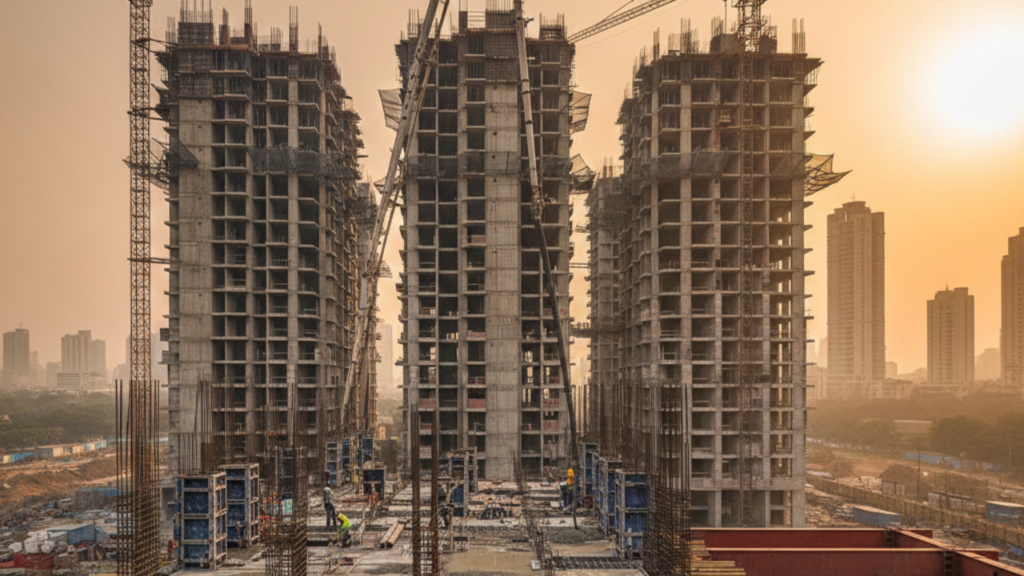
Formwork represents a significant cost and schedule component in concrete-based high-rise tower construction in India.
Climbing Formwork: Self-climbing systems attached to completed structure allow formwork to advance vertically without crane assistance. These systems are ideal for shear cores and elevator shafts in high-rise tower construction in India, enabling continuous vertical progress.
Table Formwork: Large prefabricated floor formwork tables, lifted by crane between levels, accelerate floor construction in high-rise tower construction in India. Modern table systems incorporate integrated shoring, allowing early stripping and rapid cycle times.
Aluminum Formwork Systems: Increasingly popular in high-rise tower construction in India, these reusable modular systems provide excellent concrete finish quality, reduce site labor, and enable 4-7 day floor cycles depending on project complexity. Companies like Doka, MEVA, and PERI supply formwork systems for Indian high-rise projects.
Vertical Transportation During Construction
Moving materials, equipment, and workers vertically presents major challenges in high-rise tower construction in India.
Tower Cranes: Essential equipment for high-rise tower construction in India, tower cranes lift materials to working levels. Luffing jib cranes work well in congested urban sites with limited swing radius. Internal climbing cranes attached to building cores grow with the structure, eliminating foundation requirements. Multiple cranes are common on large projects, requiring careful coordination to prevent interference.
Material Hoists: Dedicated personnel and material hoists supplement cranes, providing rapid vertical transportation for workers and light materials in high-rise tower construction in India. Double-decker hoists maximize efficiency on very tall projects.
Concrete Pumping: High-pressure concrete pumps deliver concrete to upper levels in high-rise tower construction in India. Stationary trailer-mounted pumps with boom placements are common, though very tall structures may require specialized pumping equipment. India’s tallest buildings have required concrete pumping to heights exceeding 250 meters, demanding careful mix design for pumpability and strength.
Construction Sequencing and Planning
High-rise tower construction in India follows carefully orchestrated sequences balancing speed, safety, and quality.
Typical Construction Sequence: Foundation and basement excavation typically require 6-12 months depending on depth and soil conditions. Core and structure construction proceeds at 4-7 day cycles per floor under optimal conditions, though average performance often extends to 7-10 days per floor in high-rise tower construction in India. Facade installation follows structure with varying lags depending on system type and complexity. Internal MEP (mechanical, electrical, plumbing) rough-in occurs during structure completion, with finishing following. Total construction duration for 25-40 floor projects typically ranges from 30-48 months in Indian conditions.
Fast-Track Construction: Competitive markets drive fast-track approaches in high-rise tower construction in India. Overlapping design and construction phases, prefabrication of building components, advanced procurement of long-lead items, and multiple work shifts can compress schedules 20-30% compared to traditional approaches.
MEP Systems Complexity in High-Rise Tower Construction in India
Building services in high-rise tower construction in India become increasingly complex as height increases, requiring specialized design and coordination.
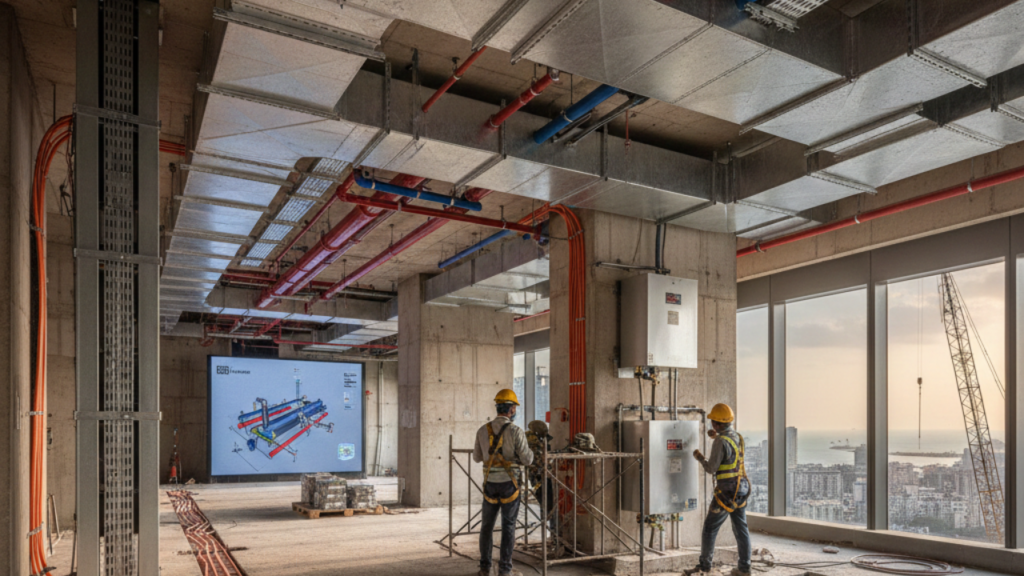
HVAC Challenges
Climate control in high-rise tower construction in India must address diverse climate zones from hot-humid coastal cities to hot-dry northern regions.
System Design: Variable Refrigerant Flow (VRF) systems provide efficient zone control for residential high-rise tower construction in India. Chilled water systems with central plants serve commercial towers efficiently. High-rise buildings require vertical zoning with equipment rooms at multiple levels reducing distribution runs and pressure differentials. Dedicated outdoor air systems (DOAS) ensure adequate ventilation while managing energy loads.
Ventilation and Pressurization: High-rise tower construction in India must maintain appropriate building pressurization preventing smoke infiltration from adjacent units or levels during fires. Stairwell pressurization systems ensure safe egress paths. Mechanical ventilation in internal spaces without operable windows requires reliable systems with backup power.
Plumbing and Water Supply
Vertical water distribution in high-rise tower construction in India faces significant pressure management challenges.
Water Supply Systems: Gravity tank systems with rooftop storage require substantial structural support and may limit building height due to pressure limitations. Hydropneumatic pressurization systems provide consistent pressure without rooftop tanks, popular in modern high-rise tower construction in India. Zone pumping divides buildings into vertical sections with dedicated pumps, preventing excessive pressures at lower levels.
Drainage Systems: Waste and vent systems in high-rise tower construction in India must prevent siphoning and maintain trap seals despite large elevation changes. Sovent systems, modified one-pipe systems, or conventional dual-pipe systems serve different project types. Condensate drainage from numerous air conditioning units requires dedicated collection and disposal systems.
Fire Protection Systems
Fire safety in high-rise tower construction in India represents perhaps the most critical life safety consideration.
Active Fire Protection: Automatic sprinkler systems covering all occupied spaces are mandatory above certain heights per NBC provisions. Residential high-rise tower construction in India typically employs wet pipe sprinkler systems, while commercial buildings may use pre-action systems in sensitive areas. Standpipe and hose systems provide manual firefighting capability on every floor. Fire pumps with backup power ensure adequate water pressure for firefighting systems throughout building heights.
Smoke Management: Mechanical smoke exhaust systems in corridors, lobbies, and atriums remove smoke during fires. Stairwell pressurization prevents smoke infiltration into egress paths. The National Building Code of India mandates specific smoke management provisions for high-rise tower construction in India based on building height and occupancy type.
Fire Detection and Alarm: Addressable fire alarm systems provide precise location information for fire incidents. Voice evacuation systems enable phased evacuation reducing congestion in egress stairs. Integration with building automation systems enables coordinated emergency response including elevator recall, door releases, and HVAC shutdown in high-rise tower construction in India.
Electrical Systems and Power Distribution
High-rise tower construction in India requires robust electrical infrastructure supporting modern building loads and technology systems.
Power Distribution: Medium voltage distribution (11kV or 33kV) from utility to building substations reduces transmission losses in tall buildings. Multiple electrical substations at different levels serve vertical zones, reducing distribution losses and voltage drop. Emergency generators provide backup power for life safety systems including fire pumps, emergency lighting, and critical HVAC equipment. Uninterruptible Power Supply (UPS) systems protect data centers and critical equipment from power quality issues common in Indian electrical grids.
Vertical Transportation Power: Elevators represent major electrical loads in high-rise tower construction in India. Regenerative drives on modern elevators recover energy during descent, reducing overall building power consumption. Machine-room-less (MRL) elevators save valuable space at rooftops or mid-levels.
Elevator and Vertical Transportation Challenges
Vertical transportation design critically impacts functionality and marketability of high-rise tower construction in India.
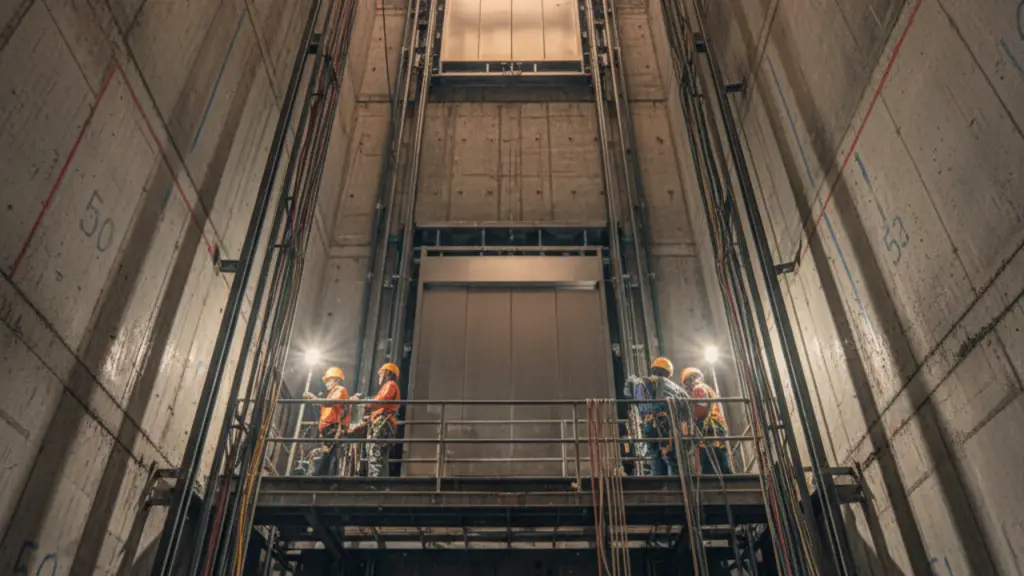
Elevator System Design
Proper elevator planning ensures adequate service levels without excessive core area consumption.
Traffic Analysis: Modern high-rise tower construction in India employs simulation software analyzing peak traffic periods, average waiting times, and system capacity. Residential buildings require different service patterns than commercial office buildings. Interval (time between successive elevator arrivals) of 30-40 seconds is acceptable for residential, while commercial buildings target 20-30 second intervals.
Grouping and Control: Destination dispatch systems optimize elevator allocation based on passenger destinations, reducing travel time. Zone systems serve specific floor ranges, improving efficiency in very tall structures. Express elevators serving sky lobbies or executive floors enhance prestige and reduce travel time in mixed-use high-rise tower construction in India.
Technical Challenges
High-speed Elevators: Buildings exceeding 40-50 floors benefit from high-speed elevators operating at 4-6 meters per second or faster. However, rope stretch and dynamic loads increase with height, requiring specialized engineering. Otis, KONE, Schindler, and ThyssenKrupp supply high-speed systems for high-rise tower construction in India.
Machine Room Requirements: Traditional elevators require penthouse machine rooms consuming valuable top-floor space. Machine-room-less technology eliminates this requirement, increasingly popular in high-rise tower construction in India where rooftop areas command premium values.
Evacuation Considerations: While elevators traditionally aren’t used during fires, some jurisdictions and newer codes permit designated evacuation elevators with special protection and controls. Modern high-rise tower construction in India may incorporate such systems, though stairwells remain primary egress paths.
Facade Engineering and Weatherproofing
Exterior enclosures in high-rise tower construction in India must withstand extreme wind pressures, monsoon rains, temperature variations, and seismic movements while providing aesthetic appeal and energy efficiency.
Curtain Wall Systems
Modern high-rise tower construction in India predominantly employs unitized curtain wall systems for efficiency and performance.
System Types: Stick-built systems assembled on-site offer flexibility but slower installation. Unitized systems with prefabricated panels expedite installation critical for schedule-driven high-rise tower construction in India. Structural glazing creates seamless glass appearances maximizing views and natural light.
Performance Requirements: Wind load resistance for facades in high-rise tower construction in India increases with height, with upper levels experiencing pressures 2-3 times those at lower levels. Water infiltration resistance must withstand horizontal rain driven by wind during monsoons. Thermal performance achieving U-values below 2.0 W/m²K reduces air conditioning loads. Acoustic performance attenuating urban noise becomes essential in city center locations.
Material Selection
Glazing: Low-E (low-emissivity) coatings on glass reduce heat gain by 30-50% compared to clear glass, essential for high-rise tower construction in India’s climate. Laminated glass provides security and acoustic benefits. Double or triple glazing with argon filling achieves superior thermal performance. Solar control glass with appropriate visible light transmission and solar heat gain coefficient balances daylighting and cooling loads.
Framing: Aluminum framing with thermal breaks dominates high-rise tower construction in India due to corrosion resistance, light weight, and design flexibility. Powder coating or anodizing provides durable finishes. Some premium projects employ bronze or stainless steel for distinctive appearances.
Installation Challenges
Installing facades on high-rise tower construction in India presents unique difficulties including wind-driven installation constraints limiting work to certain times or conditions, access for installation and future maintenance, accommodation of building movement from thermal expansion, seismic action, and structural deflection through proper joint design, and coordination with internal finishing to maintain schedule efficiency.
Safety Management in High-Rise Tower Construction in India
High-rise tower construction in India demands exemplary safety practices protecting workers and the public during extended construction periods.
Regulatory Safety Requirements
Various regulations govern construction safety including the Building and Other Construction Workers (Regulation of Employment and Conditions of Service) Act, 1996, Factory Act provisions applicable to construction sites, and state-level safety rules and inspections. The National Safety Council provides guidance and training for construction safety management.
Critical Safety Elements
Fall Protection: Edge protection with guardrails at all floor edges, safety nets below working levels, and personal fall arrest systems for workers in exposed positions are mandatory in high-rise tower construction in India. Perimeter safety screens protect surrounding areas from falling objects.
Access and Egress: Dedicated stairwells for construction access provide safe vertical circulation. Emergency evacuation plans account for multiple subcontractors and varying workforce numbers. Adequate lighting in work areas and circulation paths prevents accidents.
Material Handling Safety: Proper crane operations with certified operators and rigorous inspection protocols prevent major accidents in high-rise tower construction in India. Material loading and unloading zones with controlled access minimize struck-by incidents. Storage areas organized to prevent materials from falling or rolling.
Training and Awareness: Worker orientation before site access covering hazard recognition, PPE requirements, and emergency procedures. Toolbox talks addressing daily activities and specific hazards. Specialized training for crane operators, scaffolders, and other high-risk trades working on high-rise tower construction in India.
Project Management and Coordination
Successful high-rise tower construction in India requires sophisticated project management addressing multiple simultaneous activities and numerous stakeholders.
Planning and Scheduling
Critical Path Management: Identifying critical activities like foundation work, structural frame erection, and elevator installation helps focus resources. Schedule optimization balances concurrent activities maximizing progress while maintaining safety and quality. Realistic contingencies account for weather delays, material procurement variations, and unforeseen conditions common in high-rise tower construction in India.
Procurement Management: Long-lead items including elevators, façade systems, MEP equipment, and specialized structural materials require early ordering to prevent schedule delays. Vendor management ensuring quality and timely delivery is critical for high-rise tower construction in India success.
Quality Control
Comprehensive quality management systems ensure high-rise tower construction in India meets design specifications and regulatory requirements.
Testing and Inspection: Concrete testing at multiple frequencies for slump, compressive strength, and other properties. Reinforcement inspection before concrete placement. Structural steel welding inspection and testing. Façade testing including water infiltration, air leakage, and structural performance. MEP systems commissioning and performance verification.
Documentation: Maintaining detailed as-built drawings reflecting actual construction conditions. Material test reports and certifications. Inspection reports at critical construction stages. High-rise tower construction in India projects generate enormous documentation essential for regulatory compliance and future building operations.
Sustainability Considerations in High-Rise Tower Construction in India
Modern high-rise tower construction in India increasingly incorporates sustainable design principles reducing environmental impact and operational costs.
Green Building Certifications
Indian Green Building Council (IGBC) LEED certification has become standard for premium high-rise tower construction in India. GRIHA (Green Rating for Integrated Habitat Assessment) offers an indigenous rating system aligned with Indian conditions and practices. These certifications drive sustainable practices including energy efficiency, water conservation, material selection, and indoor environmental quality.
Energy Efficiency Strategies
Building Envelope: High-performance glazing, adequate insulation, and air-tightness reduce heating and cooling loads in high-rise tower construction in India. Optimal building orientation minimizes solar heat gain on primary facades. External shading devices reduce direct solar radiation while preserving views.
Renewable Energy: Rooftop solar photovoltaic systems offset electrical consumption in high-rise tower construction in India. Solar water heating systems serve domestic hot water needs. Some projects incorporate wind turbines at roof levels, though effectiveness varies based on local conditions.
Energy-Efficient Systems: LED lighting throughout buildings reduces electrical loads by 50-70% compared to traditional lighting. High-efficiency HVAC equipment with variable speed drives optimize energy consumption. Energy recovery systems capture waste heat for beneficial use. Building automation systems optimize operations based on occupancy and conditions.
Water Management
Water Conservation: Low-flow plumbing fixtures reduce consumption by 30-40% in high-rise tower construction in India. Rainwater harvesting systems collect roof runoff for landscape irrigation and flushing. Wastewater recycling systems treat greywater for non-potable applications. Landscaping with native drought-resistant species minimizes irrigation requirements.
Waste Management
Construction waste management plans for high-rise tower construction in India include on-site segregation of waste streams, recycling concrete, metal, and other materials, minimizing packaging waste through bulk procurement, and proper disposal of hazardous materials like paints and solvents. The Central Pollution Control Board (CPCB) provides guidelines for construction waste management.
Common Challenges and Solutions in High-Rise Tower Construction in India
Labor Availability and Skill Development
Challenge: Skilled labor shortages, particularly for specialized trades like structural steel erectors, curtain wall installers, and MEP technicians, affect high-rise tower construction in India quality and schedules.
Solutions: Investment in training programs developing specialized skills. Partnership with technical institutes and ITIs (Industrial Training Institutes) creating talent pipelines. Competitive compensation attracting skilled workers. Use of prefabrication reducing on-site skill requirements.
Material Availability and Cost Fluctuations
Challenge: Price volatility for steel, cement, and other commodities impacts budgets in multi-year high-rise tower construction in India projects.
Solutions: Long-term supply agreements with price escalation clauses. Strategic material stockpiling during favorable pricing. Material substitution where specifications allow. Value engineering identifying cost savings without compromising performance.
Weather-Related Delays
Challenge: Monsoon seasons, extreme heat, and poor air quality days during winter in northern India affect productivity in high-rise tower construction in India.
Solutions: Weather-protected work areas for critical activities. Concrete curing compounds and methods suitable for hot weather. Extended work shifts during favorable seasons compensating for low-productivity periods. Advanced weather forecasting enabling schedule adjustments.
Urban Logistics and Site Constraints
Challenge: Congested urban sites with limited material staging areas, restricted access, and noise/dust regulations complicate high-rise tower construction in India.
Solutions: Just-in-time material delivery minimizing on-site storage. Off-site prefabrication reducing site congestion. Coordination with municipal authorities for road closures or night work permissions. Dust suppression and noise mitigation measures maintaining community relations.
Future Trends in High-Rise Tower Construction in India
Building Information Modeling (BIM): Advanced 3D modeling enabling clash detection, quantity estimation, and construction sequencing visualization is becoming standard in high-rise tower construction in India. BIM facilitates better coordination among architectural, structural, and MEP disciplines.
Prefabrication and Modular Construction: Factory-built components including bathroom pods, MEP modules, and structural elements reduce on-site labor and improve quality control in high-rise tower construction in India. Some projects explore fully modular construction where entire room units are fabricated off-site and stacked on-site.
Advanced Materials: Ultra-high-performance concrete (UHPC) with strengths exceeding 150 MPa enables slender structural elements. Fiber-reinforced polymers (FRP) for reinforcement resist corrosion, particularly beneficial in coastal high-rise tower construction in India. Self-healing concrete with bacteria or chemical capsules extends service life.
Smart Building Technologies: Internet of Things (IoT) sensors throughout buildings monitor structural health, environmental conditions, and equipment performance. Artificial intelligence optimizes building systems for energy efficiency and occupant comfort. Digital twins (virtual replicas) enable predictive maintenance and operational optimization in high-rise tower construction in India.
Sustainable Technologies: Net-zero energy buildings producing as much energy as they consume through renewables and extreme efficiency. Biophilic design integrating nature and natural systems into high-rise tower construction in India. Circular economy approaches prioritizing material reuse and recyclability.
Conclusion
High-rise tower construction in India represents one of the most complex and challenging endeavors in the construction industry, requiring integration of advanced engineering, sophisticated construction methodologies, regulatory compliance, and rigorous project management. As Indian cities continue vertical expansion accommodating growing populations and economic activity, understanding and addressing the unique challenges of 25+ floor projects becomes increasingly critical.
From deep foundation engineering in diverse soil conditions to sophisticated MEP systems, from seismic and wind resistance to fire safety and evacuation planning, successful high-rise tower construction in India demands expertise across multiple disciplines working in coordinated fashion. The challenges are significant—soil variability, seismic risks, climate extremes, regulatory complexity, and urban logistics constraints all test project teams.
However, Indian construction industry has demonstrated remarkable capability to deliver world-class high-rise projects meeting international standards. Iconic towers across Mumbai, Bangalore, Delhi, and other cities stand testament to engineering excellence and construction capability. As technology advances and experience accumulates, high-rise tower construction in India continues evolving toward greater efficiency, sustainability, and performance.
For developers, architects, engineers, and construction professionals engaged in high-rise tower construction in India, success lies in thorough planning, appropriate technology selection, skilled execution, and unwavering commitment to quality and safety. These vertical cities of the future shape India’s urban landscape while providing modern, sustainable spaces for living and working.
The future of high-rise tower construction in India looks toward smarter, greener, and more resilient buildings incorporating cutting-edge technologies while respecting local conditions and culture. By learning from past projects, embracing innovation, and maintaining focus on fundamental engineering principles, India’s high-rise construction industry will continue reaching new heights—literally and figuratively.
For additional information on high-rise design and construction, consult resources from the Council on Tall Buildings and Urban Habitat, the Institution of Structural Engineers, or engage experienced professionals specializing in high-rise tower construction in India.
Related Topics:
Sustainable building practices