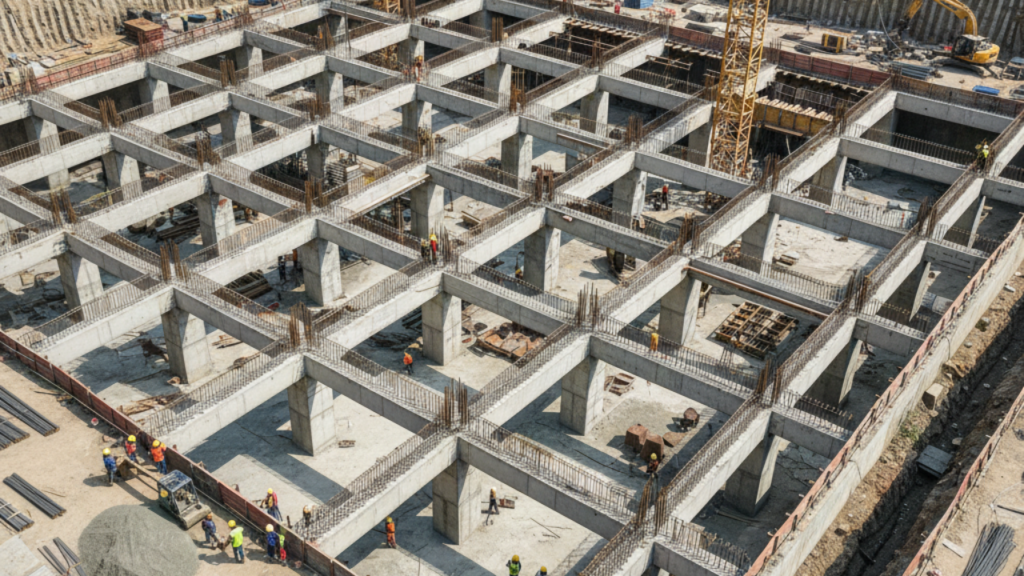
Commercial showroom construction represents a unique intersection where aesthetic appeal meets structural integrity. Unlike traditional retail spaces, showrooms demand exceptional design quality while maintaining long-term durability to withstand constant foot traffic, product displays, and evolving business needs. This comprehensive guide explores the essential elements of successful commercial showroom construction, from initial planning to final execution, ensuring your investment delivers both visual impact and lasting performance.
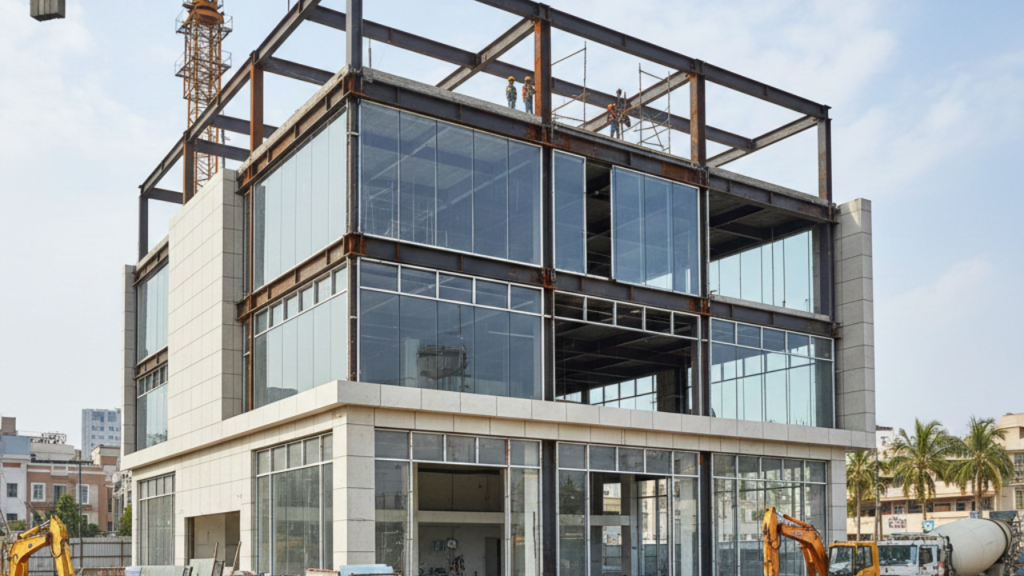
Whether you’re building an automobile dealership, furniture store, electronics outlet, or luxury retail space, understanding the principles of commercial showroom construction ensures your project achieves its dual objectives: creating an inviting customer experience while maintaining structural excellence for decades to come.
Understanding Commercial Showroom Construction Requirements
Commercial showroom construction differs significantly from standard commercial building projects. Showrooms require open floor plans, strategic lighting placement, climate control systems, and flexible spaces that can adapt to changing product lines and display configurations. According to building industry standards, showroom spaces must balance form and function while adhering to strict building codes.
Key Planning Considerations
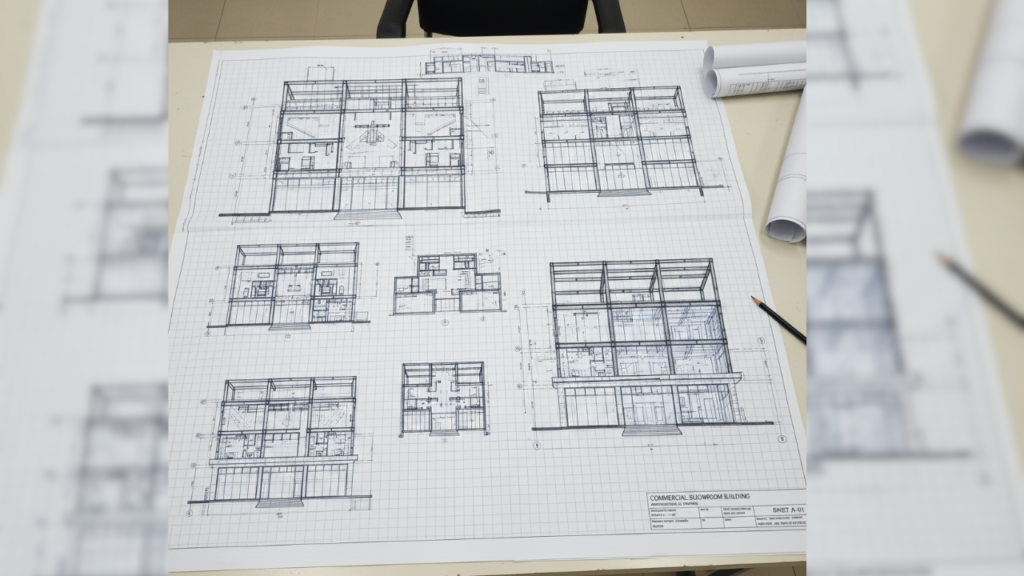
Successful commercial showroom construction begins with comprehensive planning that addresses multiple critical factors:
Site Selection and Analysis: The location impacts everything from customer accessibility to construction costs. Commercial real estate experts recommend analyzing traffic patterns, visibility, parking availability, and local zoning regulations before breaking ground. Your site must accommodate current needs while allowing for future expansion.
Space Programming: Different product categories require specific spatial considerations. Automobile showrooms need ceiling heights of 14-20 feet with column-free spans up to 60 feet, while furniture showrooms benefit from varied ceiling heights creating distinct zones. Interior design showrooms require excellent natural lighting, whereas electronics showrooms need controlled lighting environments.
Building Codes and Permits: Commercial showroom construction must comply with local building codes, International Building Code (IBC) standards, fire safety regulations, and Americans with Disabilities Act (ADA) requirements. Obtaining proper permits before construction prevents costly delays and legal complications.
Essential Design Elements in Commercial Showroom Construction
1. Open Floor Plans and Spatial Flexibility
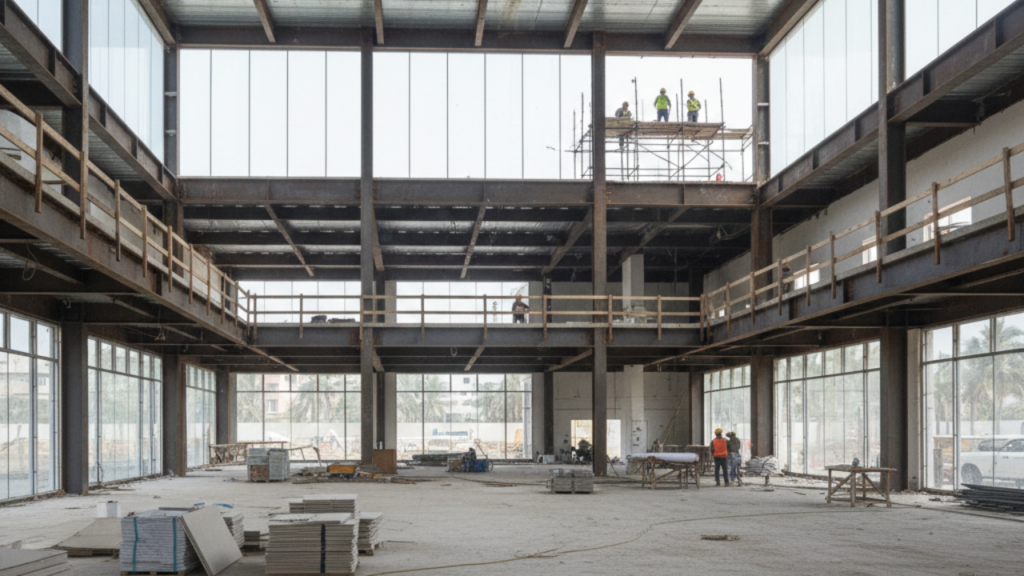
The hallmark of exceptional commercial showroom construction is creating expansive, column-free spaces that maximize product visibility and customer movement. Modern showrooms utilize structural systems that minimize interior supports while maintaining building integrity.
Structural Solutions for Open Spaces:
Steel frame construction provides superior span capabilities, allowing for column spacing of 40-60 feet in typical applications and up to 100 feet in specialized designs. Post-tensioned concrete slabs offer excellent load-bearing capacity while maintaining flat, level surfaces crucial for product displays. Long-span roof trusses or space frames eliminate the need for intermediate columns, creating uninterrupted visual experiences.
The flexibility to reconfigure spaces without major structural modifications is essential in commercial showroom construction. Demountable partition systems, modular display fixtures, and accessible utilities allow brands to refresh their presentation regularly without extensive renovations. This adaptability protects your long-term investment as market trends and product lines evolve.
2. Advanced Lighting Systems
Lighting makes or breaks showroom effectiveness. Commercial showroom construction must incorporate sophisticated lighting designs that enhance product presentation while maintaining energy efficiency and durability.
Multi-Layered Lighting Approach:
Ambient lighting provides overall illumination using high-efficiency LED fixtures with color temperatures between 3000K-4000K for warm, inviting environments. Accent lighting highlights specific products through track lighting, adjustable spotlights, and display case lighting with precise beam control. Task lighting ensures adequate illumination for customer interaction areas, service desks, and consultation zones.
Natural daylighting through strategically placed windows, skylights, and curtain wall systems reduces energy costs while creating dynamic, appealing spaces. However, proper solar heat gain management through Low-E glazing, automated shading systems, and optimal orientation prevents excessive heat buildup and UV damage to displayed products.
Modern commercial showroom construction increasingly incorporates smart lighting controls with daylight harvesting, occupancy sensors, and programmable scenes that adapt throughout the day, reducing energy consumption by 30-50% compared to traditional systems.
3. Climate Control and HVAC Systems
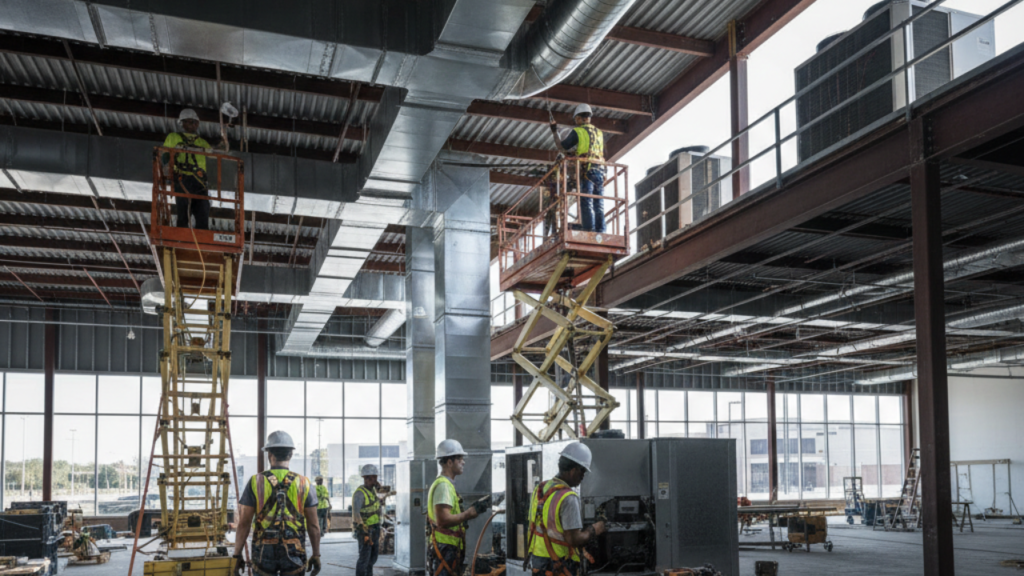
Maintaining consistent temperature and humidity levels protects both products and customer comfort. HVAC design in commercial showroom construction must account for high ceilings, large glass areas, and variable occupancy loads.
HVAC Considerations:
Variable Refrigerant Flow (VRF) systems provide excellent efficiency and zone control, allowing different areas to maintain optimal conditions based on specific needs. Underfloor air distribution systems offer superior comfort in high-ceiling spaces while remaining visually unobtrusive. Dedicated outdoor air systems (DOAS) ensure proper ventilation meeting ASHRAE standards while managing energy costs.
Large showroom spaces benefit from destratification fans that prevent heat accumulation at ceiling levels, improving comfort and reducing heating costs. Humidity control systems protect sensitive products like electronics, musical instruments, and leather goods from moisture-related damage.
Durable Building Materials for Commercial Showroom Construction
Flooring Solutions
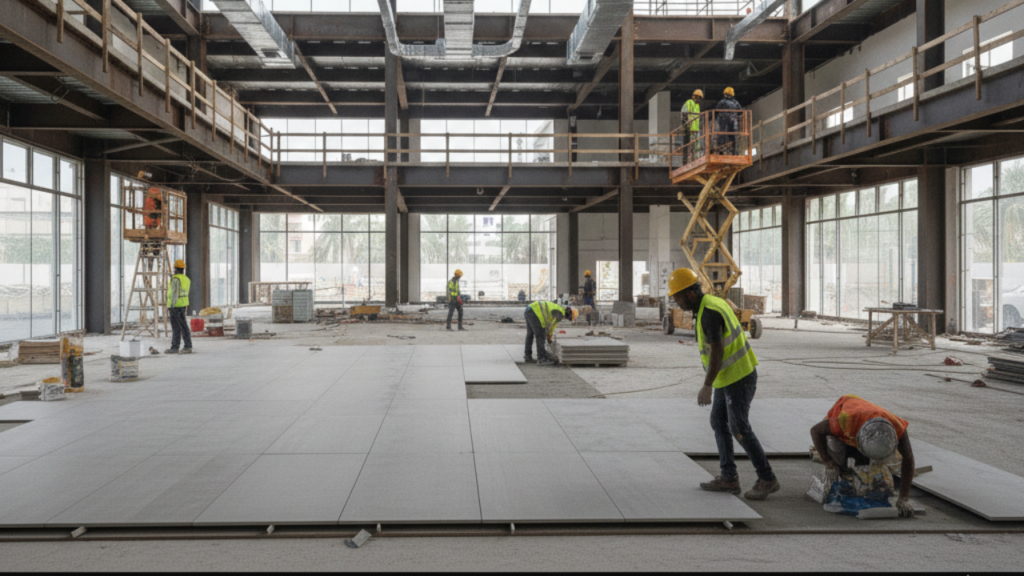
Flooring in commercial showroom construction must withstand heavy traffic, potential impacts from product movement, and frequent cleaning while maintaining aesthetic appeal for years. The right flooring choice impacts both initial construction costs and long-term maintenance expenses.
High-Performance Flooring Options:
Polished concrete flooring offers exceptional durability, low maintenance, and modern aesthetics. When properly sealed and maintained, polished concrete can last 20+ years without replacement. The reflective surface enhances lighting effectiveness, reducing energy costs. Concrete polishing systems achieve various finish levels from matte to high-gloss depending on brand requirements.
Large-format porcelain tiles provide luxury appearance with outstanding durability. Commercial-grade porcelain withstands heavy loads, resists staining, and maintains appearance with minimal maintenance. Proper installation with appropriate substrates prevents cracking and ensures longevity.
Epoxy flooring systems deliver seamless, chemical-resistant surfaces ideal for automotive and industrial product showrooms. These systems bond directly to concrete substrates, creating monolithic floors that resist damage from dropped items, chemicals, and heavy equipment movement.
Luxury vinyl tile (LVT) and luxury vinyl plank (LVP) offer excellent durability with warmth and design flexibility. Commercial-grade LVT achieves wear layer thicknesses of 20-28 mils, providing resistance to scratching, scuffing, and indentation. These materials excel in furniture and home goods showrooms where softer flooring complements product displays.
Wall and Ceiling Systems
Walls and ceilings in commercial showroom construction serve multiple functions: structural support, aesthetic enhancement, acoustic management, and utility concealment.
Interior Wall Solutions:
Metal stud framing with gypsum board provides economical, flexible wall systems that accommodate future modifications easily. Impact-resistant drywall in high-traffic areas prevents damage from carts, products, and accidental contact. Decorative wall panels made from wood, metal, fabric, or composite materials create distinctive brand identities while offering durability and easy replacement.
Demountable partition systems allow showroom reconfiguration without demolition waste or extended downtime. These systems maintain professional appearance while providing the flexibility modern retailers demand. Glass partition systems create semi-private spaces for customer consultations while maintaining visual openness and light transmission.
Ceiling Solutions:
Exposed structure ceilings in commercial showroom construction maximize ceiling height while providing industrial-chic aesthetics. Proper painting, acoustic treatment, and coordinated utilities create polished appearances without suspended ceiling costs.
Acoustic ceiling tiles control noise levels in busy showrooms, improving customer experience and employee comfort. High Noise Reduction Coefficient (NRC) ratings of 0.70-0.90 significantly reduce sound reverberation. Modern tiles come in various designs, some mimicking wood, metal, or decorative patterns.
Suspended linear metal ceilings offer contemporary aesthetics with excellent durability and accessibility to plenum spaces for maintenance. These systems integrate seamlessly with lighting and HVAC components while allowing individual panel replacement when needed.
Exterior Facades and Glazing
The exterior of commercial showroom construction projects serves as the primary brand statement while protecting the interior from weather elements and providing security.
Curtain Wall Systems:
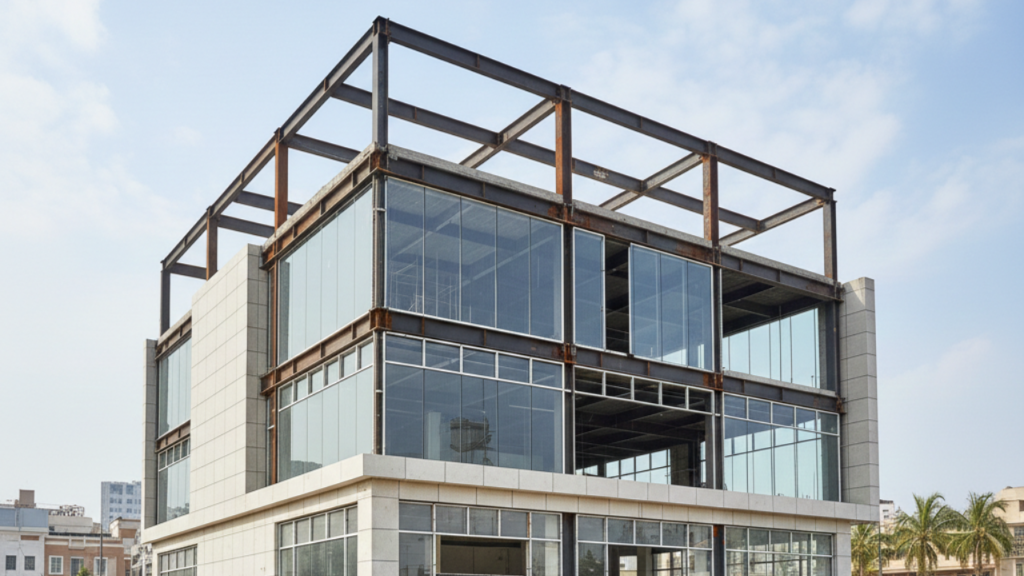
Aluminum-framed curtain wall systems with high-performance glazing create stunning visual effects while meeting energy codes. Modern glazing technologies include triple-pane configurations, low-E coatings, and argon gas fills achieving U-values as low as 0.20, dramatically reducing heating and cooling costs.
Structural glazing systems eliminate visible frames, creating seamless glass appearances that maximize product visibility from exterior viewpoints. These systems require precise engineering but deliver unmatched aesthetic impact.
Solid Wall Cladding:
Metal panel systems including aluminum composite panels, standing seam metal, and corrugated metal provide durable, low-maintenance exteriors with modern aesthetics. Proper installation with weather barriers and insulation ensures energy efficiency and moisture protection.
Masonry and concrete exteriors offer timeless durability with excellent security properties. Modern finishes including polished concrete, integral color, and exposed aggregate provide attractive appearances requiring minimal long-term maintenance.
Structural Engineering for Commercial Showroom Construction
Foundation Systems
The foundation in commercial showroom construction must support not only the building structure but also dynamic loads from products, displays, and equipment. Soil conditions, building size, and local seismic requirements determine appropriate foundation types.
Foundation Options:
Spread footing foundations work well in stable soil conditions with good bearing capacity. These economical systems distribute loads through individual footings under columns and continuous footings under walls.
Mat foundations or raft slabs distribute loads over larger areas, suitable for weaker soils or heavily loaded buildings. These monolithic concrete slabs provide excellent support while creating level floor surfaces ideal for showroom applications.
Deep foundation systems including driven piles or drilled piers transfer loads to competent bearing strata when surface soils are inadequate. While more expensive, these systems ensure structural stability in challenging soil conditions.
Proper foundation design in commercial showroom construction includes consideration for future equipment loads, mezzanine additions, and changing use patterns, preventing costly retrofitting later.
Structural Frame Design
The structural frame determines span capabilities, ceiling heights, and future modification possibilities in commercial showroom construction. Engineers select systems balancing initial costs, long-term performance, and functional requirements.
Structural Steel Framing:
Steel provides maximum flexibility with excellent strength-to-weight ratios. Rigid frame systems achieve long spans with minimal depth, maximizing usable space. Moment-resisting frames eliminate bracing in certain locations, preserving open floor plans. Pre-engineered metal building systems offer cost-effective solutions for simple rectangular showrooms with standardized dimensions.
Concrete Framing:
Cast-in-place concrete frames offer superior fire resistance, acoustic isolation, and thermal mass benefits. Flat plate or flat slab systems create smooth ceilings ideal for finished spaces. Post-tensioned concrete allows longer spans with reduced structural depth. Tilt-up concrete construction provides economical wall and structural systems for single-story showrooms.
Hybrid systems combining steel and concrete leverage the advantages of each material. Steel roof framing over concrete walls and floors is common in commercial showroom construction, providing cost optimization with excellent performance.
Roof Systems
Roofs in commercial showroom construction must shed water effectively, support mechanical equipment and potential solar arrays, provide adequate insulation, and last 20-30 years with proper maintenance.
Low-Slope Roof Systems:
TPO (Thermoplastic Polyolefin) membranes offer excellent UV resistance, heat reflectivity, and weldable seams creating watertight systems. Properly installed TPO roofs last 20-25 years with minimal maintenance.
EPDM (Ethylene Propylene Diene Monomer) rubber roofing provides proven durability with excellent weather resistance. These systems accommodate building movement without cracking and resist ozone degradation.
Modified bitumen systems use polymer-modified asphalt in multi-ply configurations, creating robust, puncture-resistant roofs suitable for heavy equipment installations.
Metal Roofing:
Standing seam metal roofs deliver 40-50 year lifespans with proper maintenance. These systems excel in commercial showroom construction by accommodating thermal movement, supporting solar panel installations, and providing attractive appearances from elevated viewpoints. Metal roofing integrates easily with daylighting elements through translucent panel insertions or monitor-style skylights.
MEP Systems in Commercial Showroom Construction
Electrical Infrastructure
Commercial showroom construction requires robust electrical systems supporting high lighting loads, HVAC equipment, specialized product displays, and modern technology integration.
Electrical Design Considerations:
Service capacity must accommodate current needs plus 20-30% growth for future expansion. Showrooms typically require 20-30 watts per square foot for general operations, with additional capacity for specialized equipment. Distribution panels strategically located throughout the space reduce voltage drop and wire costs while improving flexibility.
LED lighting throughout the facility reduces electrical loads by 50-70% compared to traditional technologies while improving light quality and reducing maintenance. Smart controls with daylight harvesting, occupancy sensing, and programmable schedules optimize energy use.
Floor boxes and overhead raceways provide flexible power and data access for reconfigurable display layouts. These systems allow product repositioning without extensive rewiring, essential in dynamic retail environments.
Dedicated circuits for show-stopping displays, video walls, and interactive technology ensure reliable operation without interfering with general building systems. Backup power systems protect critical functions during outages, maintaining security and preventing product loss.
Plumbing Systems
While commercial showroom construction typically has limited plumbing requirements compared to other commercial types, proper design ensures code compliance and long-term reliability.
Plumbing Requirements:
Restroom facilities sized according to occupancy codes with water-efficient fixtures reduce operational costs. ADA-compliant fixtures ensure accessibility for all visitors. Break room and maintenance areas require domestic water supply and drainage.
Floor drains in maintenance areas, loading docks, and potential water sources prevent damage from leaks or spills. Proper trap primers maintain water seals in infrequently used drains, preventing sewer gas infiltration.
Hydronic heating systems in cold climates provide comfortable radiant heat without air movement disturbing displayed products. Snowmelt systems in entrance areas and loading zones prevent ice accumulation, improving safety and reducing maintenance.
Fire Protection Systems
Life safety represents the highest priority in commercial showroom construction. Comprehensive fire protection systems protect people, products, and property investments.
Fire Suppression:
Automatic sprinkler systems meeting NFPA 13 standards for light hazard or ordinary hazard occupancies depending on product types and quantities. Wet pipe systems work well in heated spaces, while dry pipe or pre-action systems protect areas subject to freezing.
Special hazard suppression including clean agent systems protect valuable electronics or vehicles where water damage concerns exist. These systems use chemicals or inert gases that suppress fire without leaving residue.
Fire Detection and Alarm:
Addressable fire alarm systems provide precise location information and reduce false alarms through verification features. Smoke detection in return air systems provides early warning of developing fires. Voice evacuation systems clearly communicate instructions during emergencies, improving occupant safety.
Integration with security systems, access control, and HVAC shutdown ensures coordinated emergency response. Mass notification systems alert building occupants and responders through multiple communication channels.
Sustainability in Commercial Showroom Construction
Modern commercial showroom construction increasingly incorporates sustainable design principles that reduce environmental impact while lowering operational costs and enhancing brand reputation.
Energy Efficiency Strategies
Building envelope optimization through high-performance insulation, advanced glazing systems, and air barrier continuity reduces heating and cooling loads by 40-60% compared to minimum code requirements. LEED certification standards provide frameworks for achieving verified performance.
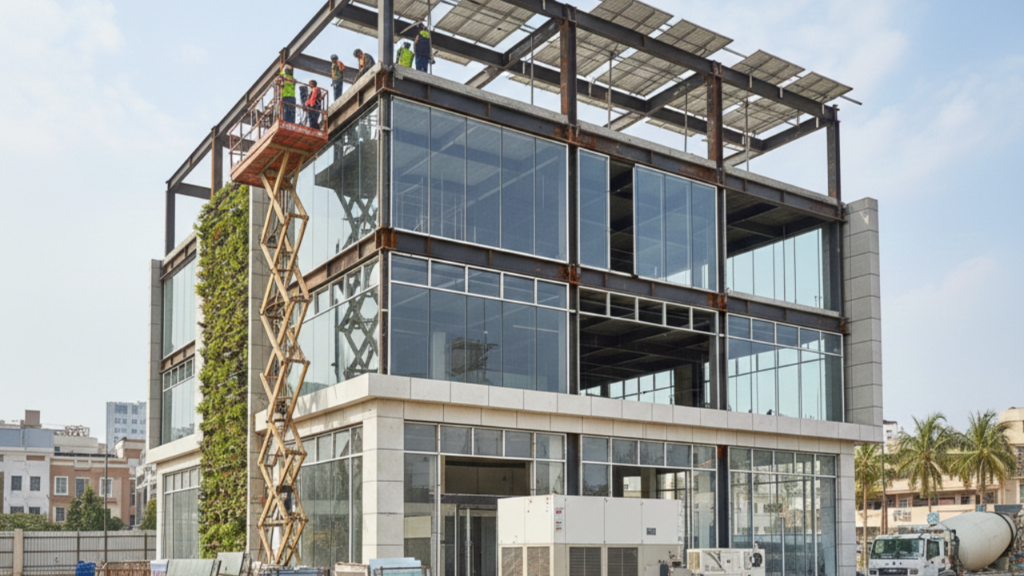
Renewable energy integration including rooftop solar arrays and solar thermal systems offset electrical consumption and water heating costs. Battery storage systems capture excess generation for use during peak demand periods, reducing utility costs and improving grid resilience.
Energy recovery ventilation systems capture heating or cooling from exhaust air, reducing the energy required to condition incoming fresh air. These systems provide excellent return on investment in climate zones with significant heating or cooling loads.
Material Selection
Sustainable commercial showroom construction prioritizes materials with recycled content, regional sourcing, low VOC emissions, and durability requiring less frequent replacement.
Recycled steel framing, reclaimed wood elements, and recycled content gypsum board reduce embodied carbon while maintaining performance standards. Local material sourcing within 500 miles reduces transportation emissions and supports regional economies.
Low-emitting materials including paints, adhesives, sealants, and flooring protect indoor air quality for employees and customers. Third-party certifications like GreenGuard Gold verify emission levels meet stringent health standards.
Water Conservation
Low-flow plumbing fixtures reduce water consumption by 30-40% without compromising functionality. Dual-flush toilets, sensor-operated faucets, and waterless urinals maximize savings in public restrooms.
Rainwater harvesting systems collect roof runoff for landscape irrigation and potentially toilet flushing, reducing municipal water demand. Bioswales and permeable paving manage stormwater runoff naturally, reducing stress on municipal systems while filtering pollutants.
Technology Integration in Modern Showroom Construction
Commercial showroom construction must accommodate rapidly evolving technology requirements that enhance customer experience and operational efficiency.
Smart Building Systems
Building automation systems (BAS) integrate HVAC, lighting, security, and access control into unified platforms controllable from mobile devices. These systems optimize energy use, provide predictive maintenance alerts, and allow remote monitoring of building performance.
Internet of Things (IoT) sensors throughout the facility collect data on occupancy patterns, temperature variations, equipment performance, and customer behavior. Analytics platforms process this data providing insights that improve operations and customer experience.
Customer Experience Technology
Interactive displays, augmented reality applications, and virtual reality experiences require robust IT infrastructure including high-speed networking, wireless access points throughout the facility, and electrical capacity for continually evolving technology.
Digital signage systems provide dynamic content that can be updated remotely, maintaining fresh, relevant messaging without physical changes. These systems require network connectivity, mounting infrastructure, and electrical services planned during commercial showroom construction.
Construction Process and Project Management
Pre-Construction Phase
Successful commercial showroom construction begins with thorough pre-construction activities that establish clear expectations and prevent costly changes during construction.
Design Development: Working with experienced architects and engineers familiar with showroom requirements ensures designs meet functional needs while complying with codes. Value engineering during design identifies cost savings without compromising quality or performance.
Contractor Selection: Choosing contractors with proven showroom experience reduces problems during construction. Reviewing past projects, checking references, and verifying licensing and insurance protects your investment. Competitive bidding or negotiated contracts should be selected based on project complexity and timeline requirements.
Permits and Approvals: Obtaining building permits, fire marshal approvals, zoning variances if needed, and utility connection permits before construction starts prevents delays. Some jurisdictions require special use permits for certain retail categories or locations.
Construction Phase Management
Commercial showroom construction typically follows a 6-12 month timeline depending on size and complexity. Effective project management ensures quality results within budget and schedule.
Quality Control: Regular inspections at critical construction milestones verify work meets specifications and codes. Third-party testing of concrete, structural steel, roofing, and fire protection systems provides independent verification of quality.
Schedule Management: Coordinating material deliveries, subcontractor sequencing, and inspection timing prevents delays. Weather contingencies, lead time for custom materials, and seasonal construction limitations must be factored into realistic schedules.
Budget Control: Regular cost tracking, change order management, and contingency allocation prevent budget overruns. Unexpected conditions, owner-requested changes, and code modifications can impact costs even with thorough planning.
Commissioning and Closeout
Proper building commissioning ensures all systems function as designed before occupancy. This process includes functional performance testing of HVAC systems, verification of lighting controls and automated systems, fire alarm and suppression system testing, and energy management system programming.
Training building operators on system maintenance, controls operation, and emergency procedures prevents problems after contractor departure. Comprehensive operations and maintenance manuals document systems for long-term facility management.
Obtaining certificate of occupancy and final inspections, completing punch list items, securing warranties and guarantees, and receiving as-built drawings completes the commercial showroom construction process.
Cost Considerations in Commercial Showroom Construction
Understanding cost factors helps in budgeting and decision-making throughout commercial showroom construction projects.
Construction Cost Factors
Building size obviously impacts total costs, but price per square foot varies significantly based on finish quality, structural complexity, and regional market conditions. Basic showrooms may cost $100-150 per square foot, while high-end luxury showrooms can exceed $300-400 per square foot.
Site conditions including soil quality, existing utilities, topography, and environmental constraints significantly impact costs. Sites requiring extensive earthwork, retaining walls, or deep foundations increase budgets substantially.
Design complexity affects both design fees and construction costs. Simple rectangular buildings with standard finishes cost less than architecturally distinctive designs with custom materials and complex building systems.
Return on Investment
Quality commercial showroom construction provides returns through increased sales from enhanced customer experience, reduced operating costs through energy-efficient systems and durable materials, and higher property values compared to lower-quality construction.
Well-designed, well-constructed showrooms require less maintenance, experience fewer system failures, and maintain attractive appearances longer than value-engineered projects cutting critical quality elements. The incremental cost of better materials and systems typically pays back within 5-10 years through reduced maintenance and replacement costs.
Brand reputation benefits from impressive facilities that reflect company values and commitment to quality. Showrooms often serve as the primary customer touchpoint, making them crucial marketing investments beyond mere building construction.
Best Practices for Commercial Showroom Construction Success
Drawing from successful projects nationwide, these best practices improve commercial showroom construction outcomes:
Engage Experienced Professionals: Architects, engineers, and contractors with showroom-specific experience understand unique requirements and avoid common pitfalls. Their expertise saves money by getting things right the first time.
Plan for Flexibility: Products change, brands evolve, and markets shift. Building in adaptability through accessible utilities, movable partitions, and flexible infrastructure protects long-term value.
Prioritize Customer Experience: Every design decision should consider customer perception and comfort. Lighting quality, wayfinding clarity, acoustic comfort, and temperature control directly impact sales effectiveness.
Don’t Compromise on Durability: While budget constraints are real, cutting corners on structural systems, building envelope, or major equipment leads to higher long-term costs through maintenance, repairs, and early replacement.
Consider Future Technology: Today’s cutting-edge technology becomes tomorrow’s standard expectation. Building robust IT infrastructure, adequate electrical capacity, and adaptable spaces allows technology integration as needs evolve.
Sustainable Design Pays: Energy-efficient systems, water conservation, and sustainable materials reduce operating costs while appealing to environmentally conscious consumers and meeting increasingly stringent building codes.
Common Challenges and Solutions
Commercial showroom construction presents unique challenges that experienced teams overcome through proven strategies:
Challenge – Long Span Requirements: Creating column-free spaces requires careful structural engineering. Solutions include steel moment frames, post-tensioned concrete, or engineered timber beams sized for required spans.
Challenge – Lighting Quality vs. Energy Costs: Achieving excellent product illumination while meeting energy codes requires sophisticated designs. LED technology, daylight integration, and smart controls solve this challenge effectively.
Challenge – Acoustic Control: Large open spaces with hard surfaces create noise problems. Solutions include acoustic ceiling tiles, wall panels, sound masking systems, and strategic soft furnishing placement.
Challenge – Construction Timing: Businesses often need facilities quickly to capture market opportunities. Fast-track construction using design-build delivery, prefabricated components, and extended work hours can compress schedules while maintaining quality.
Conclusion
Commercial showroom construction demands a sophisticated understanding of how design aesthetics and structural durability work together to create spaces that sell products while lasting decades. From foundation to rooftop, every decision impacts both immediate visual appeal and long-term performance.
Successful projects balance open, flexible floor plans with robust structural systems, integrate advanced lighting and climate control, select durable yet attractive finishes, and incorporate technology infrastructure supporting evolving customer expectations. By understanding these principles and working with experienced professionals, businesses create showroom facilities that enhance brand reputation, drive sales, and protect capital investments.
Whether building an automotive showcase, furniture gallery, or electronics megastore, the fundamentals of commercial showroom construction remain constant: thorough planning, quality materials, skilled execution, and commitment to both present aesthetics and future functionality. Your showroom is more than a building—it’s a brand statement, sales tool, and long-term asset that deserves the best in design and construction excellence.
For more information on commercial construction standards, visit the National Institute of Building Sciences or consult with qualified architects and engineers specializing in retail and showroom facilities. Your investment in commercial showroom construction will pay dividends for years to come when executed with knowledge, planning, and dedication to quality.
Related Topics: